
AI Insights: AI in Cybersecurity — Detecting Threats Before They Happen
Introduction
Cyberattacks are evolving faster than ever.
Traditional security systems rely on rules, signatures, and manual analysis, which often detect breaches only after damage has been done.
Enter Artificial Intelligence (AI) — the game-changer that enables systems to anticipate and neutralise threats proactively.
With AI, cybersecurity has shifted from reactive defense to predictive protection — detecting anomalies, uncovering zero-day exploits, and responding in real time.
In this blog, we’ll explore how AI is transforming cybersecurity, the technologies behind it, and the challenges that come with this intelligent defense era.
From Reactive to Predictive Security
For decades, security tools operated reactively — scanning for known malware, comparing traffic to predefined rules, or matching signatures.
But modern attacks are dynamic, distributed, and adaptive.
AI enables a new model: continuous learning and proactive defense.
Instead of waiting for a known pattern, AI systems analyse behaviour, spot deviations, and take action before a breach occurs.
Key Shift:
| Approach | Traditional | AI-Powered |
|---|---|---|
| Detection | Signature-based | Behaviour-based |
| Response | Manual | Automated |
| Adaptation | Static rules | Self-learning models |
| Coverage | Limited to known threats | Expands with continuous learning |
How AI Detects Threats Before They Happen
1. Machine Learning for Anomaly Detection
AI systems analyse logs, network traffic, and user behaviour to detect deviations from normal activity.
Example:
If an employee usually logs in from Mumbai during work hours but suddenly accesses the network from another country at midnight — the system flags it instantly.
Common ML techniques include:
- Clustering algorithms (e.g., DBSCAN, K-Means) to group normal vs. abnormal patterns.
- Isolation Forests and Auto-encoders to detect anomalies in high-dimensional data.
- Time-series models (LSTM, Prophet) for detecting unusual spikes in activity.
2. Threat Intelligence Automation
AI-powered platforms continuously collect and analyse threat data from global sources — including dark web forums, malware repositories, and honeypots.
They correlate indicators of compromise (IOCs) with internal telemetry to predict possible attack vectors.
This reduces detection time from days to seconds.
Example tools:
- IBM QRadar Advisor with Watson
- Microsoft Defender Threat Intelligence
- CrowdStrike Falcon AI
3. Behavioural Biometrics
AI models learn how users normally interact — typing speed, mouse movement, access time, and navigation patterns.
If a credential is stolen and used by someone else, the AI can detect mismatched behavior even if the login credentials are valid.
This adds a powerful behavioural layer of authentication beyond passwords or MFA.
4. Natural Language Processing (NLP) for Phishing Detection
AI can analyse emails, chat messages, and URLs to identify suspicious content or intent.
For instance:
- Transformer-based NLP models detect linguistic manipulation used in phishing.
- Computer vision models compare email designs to known spoofed brand templates.
This enables systems to block social engineering attacks — the most common entry point for breaches.
5. Automated Incident Response
AI-driven systems can autonomously contain threats once detected — isolating infected endpoints or disabling compromised accounts.
Integrated with Security Orchestration, Automation, and Response (SOAR) platforms, AI agents can:
- Quarantine devices showing malware indicators.
- Roll back unauthorised configuration changes.
- Trigger alerts to human analysts with detailed context.
This fusion of AI and automation reduces Mean Time to Detect (MTTD) and Mean Time to Respond (MTTR) — two critical cybersecurity metrics.
Benefits of AI in Cybersecurity
| Benefit | Description |
|---|---|
| Speed | Instant identification and remediation of threats. |
| Scalability | Monitors millions of events across endpoints and networks simultaneously. |
| Accuracy | Reduces false positives by learning context. |
| Adaptability | Evolves with new data and attack techniques. |
| Cost Efficiency | Reduces manual investigation workload. |
Real-World Applications
- Cloud Security: AI models detect unusual API requests, rogue instances, and permission escalation.
- Network Security: AI inspects traffic flow to flag command-and-control (C2) patterns.
- Email Filtering: AI filters spear-phishing attempts with NLP and image recognition.
- Endpoint Protection: AI-based antivirus tools (like SentinelOne, CrowdStrike) detect zero-day threats via behavioral signatures.
- Fraud Detection: Banks use anomaly detection on transactions to prevent financial fraud in real time.
Challenges and Ethical Considerations
While AI strengthens defenses, it also introduces new challenges.
1. Adversarial Attacks
Attackers can trick AI models with adversarial inputs — slightly modified data that causes misclassification.
Example: tweaking malware signatures or image pixels to evade detection.
2. Data Privacy and Bias
AI systems need vast datasets, often containing sensitive information.
If the training data is biased or poorly anonymised, the model may generate unfair or privacy-violating outcomes.
3. Over-Reliance on Automation
Human oversight remains critical.
AI can flag anomalies, but security analysts must interpret context and confirm whether the alert represents a real threat.
4. Weaponisation of AI
The same AI techniques used to defend can also be exploited — e.g., AI-generated phishing emails or deepfake-based impersonation.
The Road Ahead
The future of AI in cybersecurity lies in adaptive, self-healing defense systems — where networks continuously monitor, learn, and respond autonomously.
Emerging trends include:
- Federated learning for decentralised model training (improving privacy).
- Explainable AI (XAI) for transparent decision-making.
- AI-Augmented SOCs (Security Operations Centers) where humans and AI collaborate seamlessly.
In the coming years, AI will move beyond detection — towards anticipation and autonomous prevention.
Conclusion
AI has transformed cybersecurity from a reactive defense to a predictive intelligence discipline.
By learning from patterns, behaviours, and anomalies, AI can identify attacks before they escalate — giving organizations the edge they need in a threat landscape that evolves every second.
However, as defenders become smarter, so do attackers.
The key is not to replace human judgment with AI, but to amplify it — building a partnership where machines handle scale, and humans handle strategy.
References
 Free PDF on this topic
AI/ML Interview Questions
Your essential prep kit for AI/ML interviews.
Free PDF on this topic
AI/ML Interview Questions
Your essential prep kit for AI/ML interviews.
Enjoyed this post?
Stay in the loop
New posts + weekly digest, straight to your inbox.
Create a free account
- Save posts to your vault
- Like posts & build history
- New-post alerts
Comments
Add Your Comment
Related Posts
AI Frontiers: OpenAI Just Moved Into Google’s House
62
AI Frontiers: The Proof That Took 167 Years — And an AI
120
AI in Production: When AI Agents Go Off-Script
93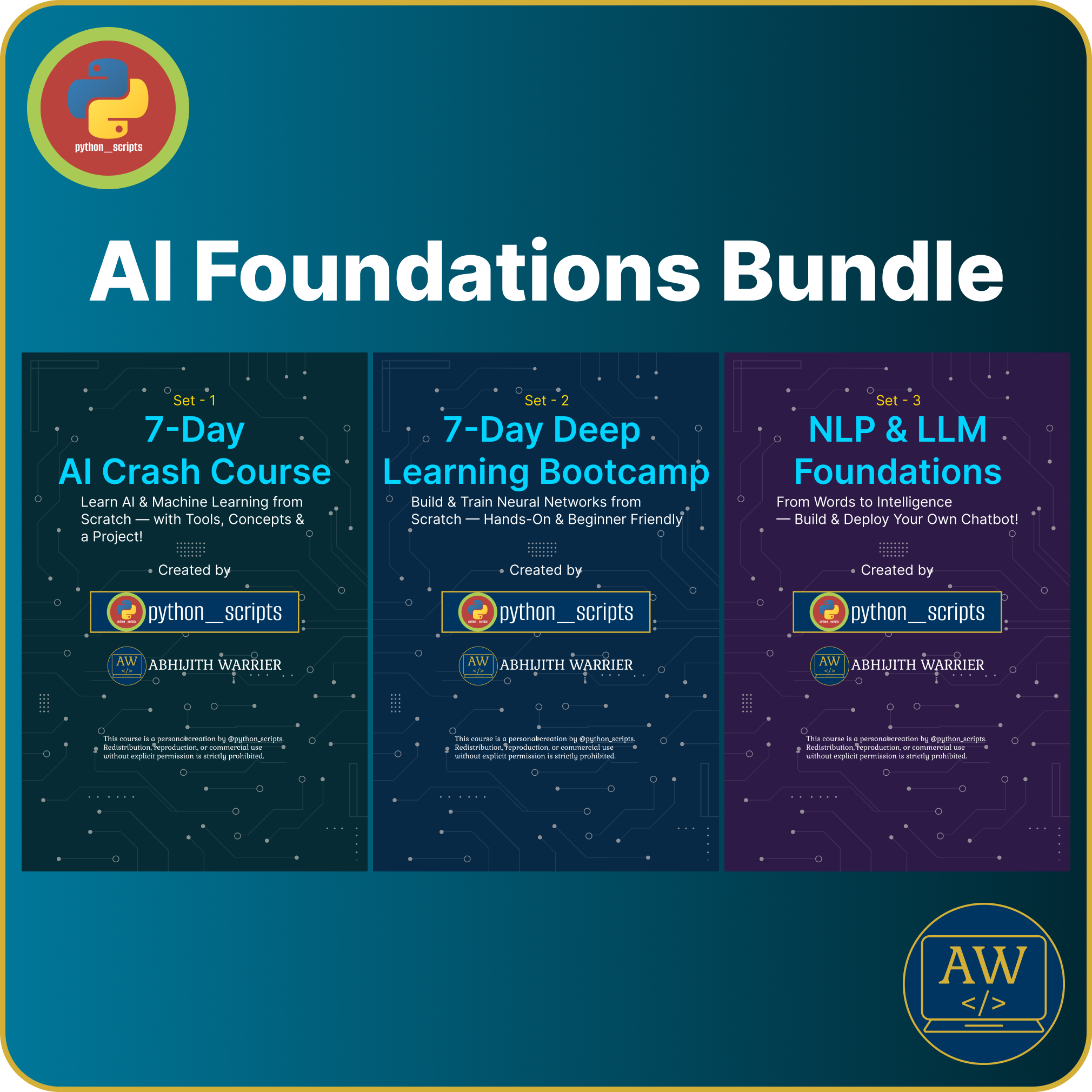
AI Foundations Bundle — From AI Basics to Deep Learning & NLP
Learn AI the right way — from core concepts to deep learning and language models, all in one structured bundle.
Ideal for beginners and developers who want a complete AI roadmap without confusion.
No comments yet. Be the first to comment!