AWS: Multi-Account Strategies for Enterprises
Introduction
As organizations scale their cloud footprint, a single AWS account quickly becomes insufficient for managing teams, workloads, governance, and security.
Enterprises today require isolation, centralized control, predictable billing, and strong guardrails — needs that naturally lead to adopting a multi-account AWS strategy.
AWS Organizations, Control Tower, Service Control Policies (SCPs), and dedicated accounts for workloads allow companies to design cloud environments that are scalable, secure, and operationally efficient.
This blog explains what multi-account strategies are, why enterprises use them, and how to implement them in a structured, governance-first manner.
Why Enterprises Need Multiple AWS Accounts
A single AWS account becomes a bottleneck as teams grow.
Multi-account setups provide:
- Security isolation — A breach in one account doesn’t compromise others.
- Clear boundaries — Separate environments: dev, staging, prod, sandbox.
- Cost visibility — Teams and projects get their own billing reports.
- Distributed responsibility — Each team can manage its own workloads safely.
- Scalability — Permissions, guardrails, and organization policies scale cleanly.
AWS itself recommends a multi-account structure as a cloud operating model, not just a best practice.
The AWS Organizations Foundation
AWS Organizations is the backbone of multi-account setups.

Figure: AWS Organizations core features that form the foundation of multi-account strategies.
It provides:
- Organizational Units (OUs) for grouping accounts.
- Service Control Policies (SCPs) for global guardrails.
- Centralized billing for visibility and consolidated cost management.
- Programmatic account creation for onboarding new teams or workloads.
An enterprise typically begins by defining its OU hierarchy, then enforcing top-down governance.
Common Multi-Account Architectures
Enterprises usually follow one of these standard structures:
1. Functional Account Model
Accounts are created based on function or responsibility:
- Security account
- Logging account
- Shared services account
- Application accounts
- Networking account
This is the model used by AWS Landing Zone and Control Tower.
2. Environment-Based Model
Each environment gets its own account:
- Development
- Staging / QA
- Production
- Sandbox
This ensures hard isolation between lower and higher environments.
3. Business Unit or Team Model
Each team owns its account:
- Payments Team
- Analytics Team
- Mobile Apps Team
- Data Platform Team
This works well for large enterprises with distributed engineering orgs.
4. Hybrid Model
The most common approach — combining Functional + Environment + Team strategies to match real-world workflows.
Using AWS Control Tower for Governance
AWS Control Tower automates setting up and governing multi-account architectures.
It provides:
- Preconfigured landing zone
- Account Factory for automated account creation
- Mandatory guardrails (preventive SCPs + detective rules)
- Centralized identity management
- Audit and logging structure
Control Tower reduces complexity for organizations adopting multi-account setups at scale.
Security Guardrails with SCPs
Service Control Policies (SCPs) allow enterprises to enforce organization-wide restrictions.
Examples include:
- Blocking creation of public S3 buckets
- Preventing disabling CloudTrail
- Restricting IAM modifications
- Enforcing MFA
- Region restrictions (allow only approved AWS regions)
SCPs ensure compliance across every account without depending solely on developer discipline.
Network Design in Multi-Account Setups
Networking becomes a core architectural pillar.
Enterprises typically centralize networking with:
Centralized VPC Architecture
- A networking account owns the core VPCs.
- Other accounts connect via VPC Peering, Transit Gateway, or VPC Lattice.
- DNS is managed through Route 53 Resolver rules.
This ensures consistent routing, secure east–west traffic, and reduced duplication.
Logging and Monitoring Across Accounts
AWS recommends centralizing logs and metrics:
- CloudTrail logs → logging account
- VPC Flow Logs → logging account
- CloudWatch metrics → cross-account dashboards
- Security Hub and GuardDuty findings → centralized security account
- Cost Explorer + Cost & Usage Reports → management account
This avoids siloed visibility and simplifies audits.
Identity and Access Management at Scale
Enterprises adopt one of the following models:
- AWS SSO with Identity Center (recommended)
- SAML-based SSO (Okta, Azure AD)
- Centralized IAM roles and cross-account access
Identity Center allows assigning roles to users across accounts without managing per-account IAM users.
Cost Governance and Budget Control
Multi-account setups make cost governance easier:
- Each account receives separate cost tracking.
- Budgets and alerts can be set for each OU or team.
- Chargeback or showback becomes simple and transparent.
Organizations often create a Finance OU for cost optimization and reporting.
Best Practices for Multi-Account AWS Architecture
- Start with a clear OU hierarchy — avoid restructuring later.
- Centralize logging, security, and networking.
- Use AWS Control Tower for automated governance.
- Apply SCPs early — guardrails are easier to relax than tighten.
- Automate account provisioning through Account Factory or IaC.
- Minimize cross-account dependencies for cleaner fault isolation.
- Document policies, naming conventions, and onboarding processes.
- Review the organization structure quarterly as teams evolve.
Conclusion
A multi-account AWS strategy is not just an organizational choice — it is a security model, a governance framework, and a scaling blueprint for modern enterprises.
By isolating workloads, enforcing guardrails, centralizing observability, and automating account creation, organizations can manage cloud environments that are robust, compliant, and ready for rapid growth.
With the right architecture and governance model, your AWS ecosystem becomes predictable, secure, and scalable — even as teams and applications multiply.
References
 Free PDF on this topic
DevOps & CI/CD Essentials Cheatsheet
Build. Test. Deploy. Repeat — DevOps & CI/CD Essentials.
Free PDF on this topic
DevOps & CI/CD Essentials Cheatsheet
Build. Test. Deploy. Repeat — DevOps & CI/CD Essentials.
Enjoyed this post?
Stay in the loop
New posts + weekly digest, straight to your inbox.
Create a free account
- Save posts to your vault
- Like posts & build history
- New-post alerts
Comments
Add Your Comment
Related Posts
AWS Engineering: The Trade-off Between Observability and Cost
48
AWS in Production: The Hidden Risk of Over-Reliance on Managed Services
55
AWS in Production: Serverless Observability — Debugging Distributed Functions in Production
174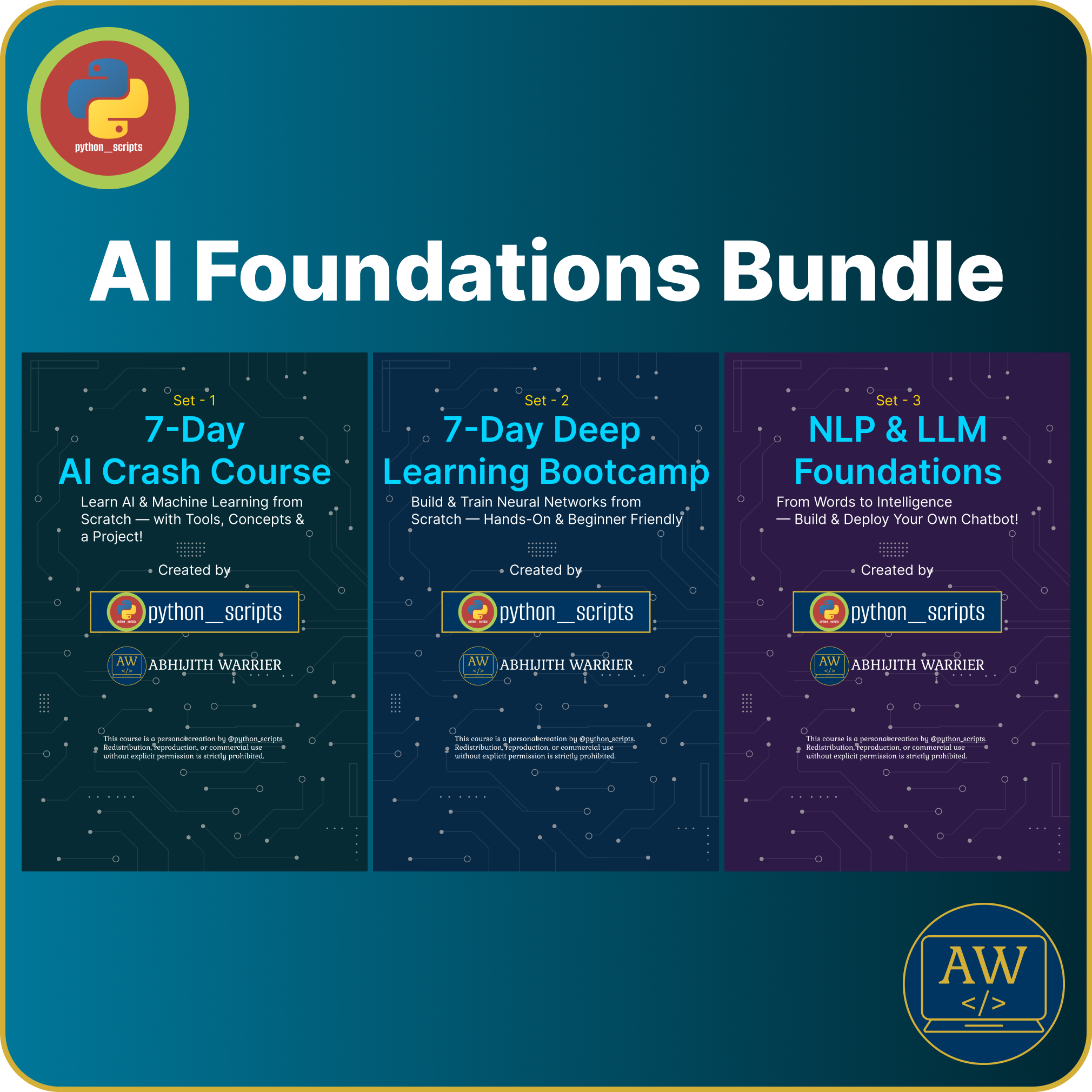
AI Foundations Bundle — From AI Basics to Deep Learning & NLP
Learn AI the right way — from core concepts to deep learning and language models, all in one structured bundle.
Ideal for beginners and developers who want a complete AI roadmap without confusion.
No comments yet. Be the first to comment!