AI Insights: AI Trends to Watch in 2026
Introduction:
AI is entering a phase where excitement is giving way to responsibility. Teams that experimented freely over the past few years are now dealing with the reality of operating AI systems in production. Questions around reliability, cost, and long-term maintainability are becoming more important than raw model capability.
By 2026, the most meaningful AI trends will not be about bigger models or faster demos. They will be about how AI fits into real systems — and how safely those systems can be run over time.
From Models to AI Systems:
Early AI adoption often meant embedding a model into an application and calling it a feature. That approach rarely survives contact with production. Models change, data shifts, and outputs degrade quietly.
By 2026, AI is treated as a system with surrounding infrastructure. Teams are building layers around models to manage lifecycle and risk.
This typically includes:
- versioned models and prompts
- evaluation pipelines that run continuously
- monitoring for output drift and failures
- clear rollback and ownership strategies
The shift is subtle but important: success is measured by system stability, not model intelligence.
Agentic AI Becomes Controlled:
Agent-based systems are still evolving, but their role in production is becoming more constrained. Fully autonomous agents remain rare because unrestricted autonomy introduces unacceptable risk.
Instead, teams are adopting bounded agents that operate within strict rules. These agents are designed to assist, not replace, decision-making.
In practice, this means agents:
- operate within scoped permissions
- follow predefined workflows
- escalate uncertainty instead of acting blindly
The trend here is toward predictability over autonomy.
Evaluation Moves into Production:
Model evaluation no longer ends at deployment. As AI systems age, their behavior changes — often without obvious signals.
By 2026, teams monitor models much like they monitor services. Evaluation becomes part of production observability.
Common signals teams track include:
- output consistency over time
- changes in input data distributions
- frequency of hallucinations or invalid outputs
- impact on downstream business metrics
Evaluation shifts from a research task to an operational one.
Smaller, Purpose-Built Models Gain Traction:
Large foundation models continue to matter, but they are not always the right choice for production workloads. Many teams discover that smaller, specialized models are easier to control and cheaper to operate.
These models trade breadth for reliability. They are easier to fine-tune, easier to deploy, and easier to reason about when something goes wrong.
The trend here is not about rejecting large models, but about choosing the right tool for the job.
Edge and On-Device AI Expands Quietly:
More inference is moving closer to users, driven by practical constraints rather than hype. Latency, privacy, and cost all push teams toward edge and on-device execution.
This shift reduces dependency on constant cloud calls and aligns better with data protection expectations. The engineering challenge moves from scale to efficiency.
Teams increasingly focus on:
- model size and memory footprint
- hardware-aware optimization
- controlled deployment strategies
Data Discipline Becomes Central:
As AI systems scale, weak data practices become impossible to ignore. Poor data quality leads to unpredictable outputs, failed evaluations, and loss of trust.
By 2026, disciplined data handling is a competitive advantage. Teams invest in understanding where data comes from, how long it should live, and how it flows across systems.
This includes:
- clear data ownership
- separation of personal and derived data
- defined retention and deletion policies
Strong AI systems are built on boring, well-managed data foundations.
Governance Becomes an Engineering Problem:
AI governance starts as policy but quickly becomes technical. Rules that live only in documents are hard to enforce at scale.
By 2026, governance is embedded into engineering workflows. Controls are implemented through code, access policies, and automation rather than manual checks.
Well-designed governance does not slow teams down. It reduces uncertainty and makes safe iteration possible.
Humans Stay in the Loop:
Despite advances in automation, removing humans entirely from AI workflows remains risky. The most resilient systems treat humans as active participants rather than fallback mechanisms.
Human oversight helps catch edge cases, provide feedback, and correct failures before they compound. This collaboration builds trust — both within teams and with users.
Automation works best when responsibility remains clear.
Conclusion:
The AI trends that matter in 2026 are not loud or flashy. They reflect a maturing discipline focused on reliability, control, and integration. AI becomes less about experimentation and more about infrastructure.
Teams that invest in stable systems, disciplined data practices, and thoughtful oversight will extract lasting value from AI. Those chasing novelty without foundations will continue to struggle.
The future of AI belongs to systems that work quietly and consistently.
References:
 Free PDF on this topic
AI/ML Interview Questions
Your essential prep kit for AI/ML interviews.
Free PDF on this topic
AI/ML Interview Questions
Your essential prep kit for AI/ML interviews.
Enjoyed this post?
Stay in the loop
New posts + weekly digest, straight to your inbox.
Create a free account
- Save posts to your vault
- Like posts & build history
- New-post alerts
Comments
Add Your Comment
Related Posts
AI Frontiers: The Proof That Took 167 Years — And an AI
119
AI in Production: When AI Agents Go Off-Script
92
The Rethought — The Math: $3.5 Trillion That Might Not Exist
104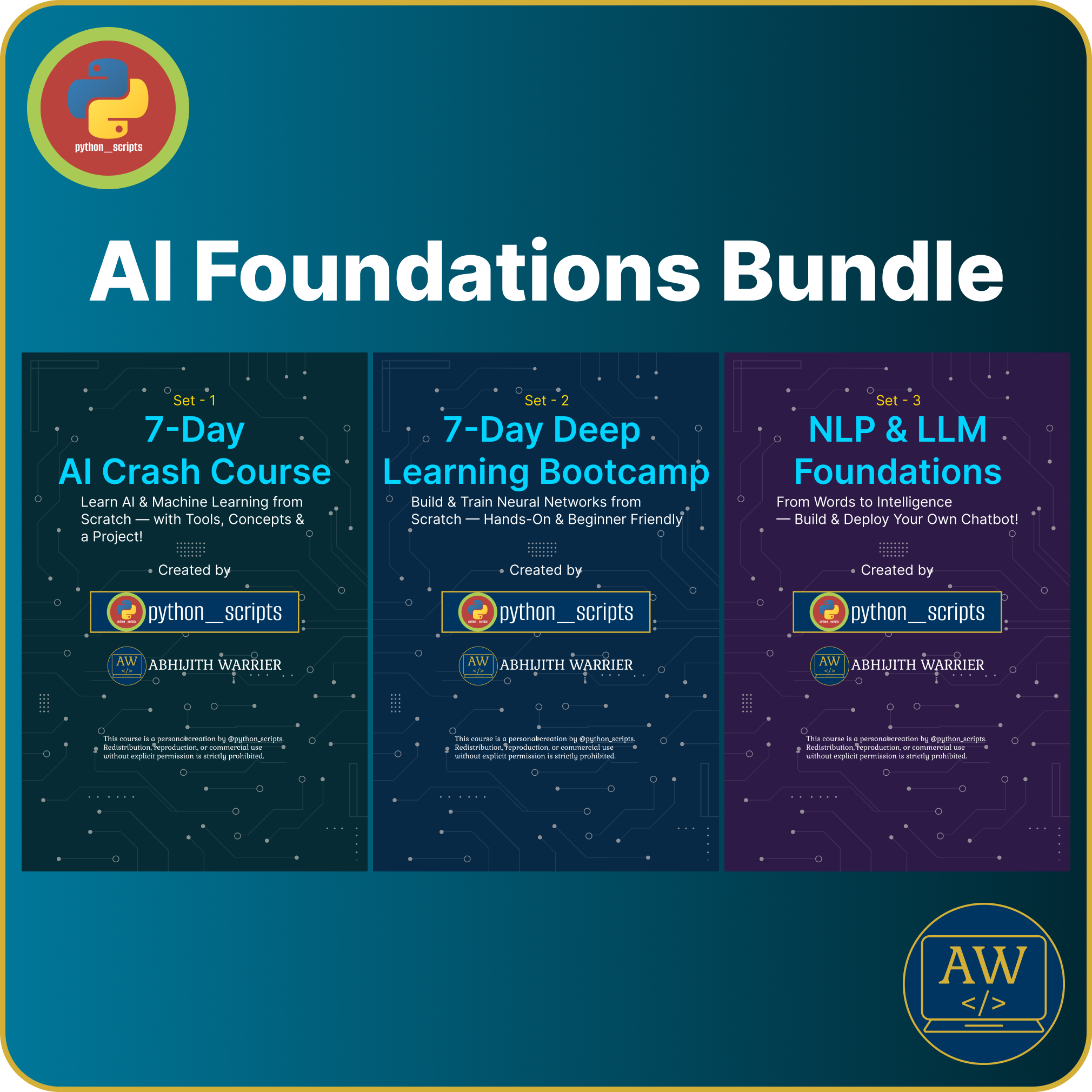
AI Foundations Bundle — From AI Basics to Deep Learning & NLP
Learn AI the right way — from core concepts to deep learning and language models, all in one structured bundle.
Ideal for beginners and developers who want a complete AI roadmap without confusion.
No comments yet. Be the first to comment!