
Data Insights: Python in the Modern Data Stack – From ETL to AI Pipelines
Introduction:
Python’s dominance in the data world did not happen overnight, and it didn’t happen because it was the fastest or the most elegant language. It happened because Python quietly adapted to every layer of the modern data stack — from raw data ingestion to machine learning and AI-driven systems.
Today, Python is no longer “just a scripting language for ETL.” It sits at the center of data engineering, analytics, and AI workflows, acting as the connective tissue between systems. Understanding why Python fits so well across this spectrum helps teams use it more effectively — and avoid misusing it where it doesn’t belong.
Python’s Role Has Expanded Beyond Traditional ETL:
In earlier data architectures, Python was often limited to extraction scripts or lightweight transformations. Warehouses handled the heavy lifting, and Python lived at the edges.
Modern data stacks have blurred those boundaries. Python is now used not just to move data, but to orchestrate, validate, enrich, and reason about it. The language fits naturally into environments where logic changes frequently and workflows need to evolve.
This shift is less about performance and more about flexibility. Python allows teams to encode business logic in a way that’s readable, testable, and adaptable — something SQL alone struggles with at scale.
ETL Has Become ELT — and Python Adapted:
As cloud data warehouses matured, the industry shifted from ETL to ELT. Raw data is loaded first, then transformed inside the warehouse. Python didn’t disappear during this transition; it moved up the stack.
Today, Python commonly handles:
- data extraction from APIs and event streams
- schema validation and data quality checks
- orchestration of transformation workflows
- pre- and post-processing around warehouse jobs
Instead of competing with SQL, Python complements it. SQL handles set-based transformations efficiently, while Python manages orchestration, branching logic, and integration with external systems.
Python as the Glue in Orchestration Layers:
One of Python’s strongest positions in the modern data stack is orchestration. Tools like Airflow, Dagster, and Prefect use Python not just as a runtime, but as a configuration language.
This matters because orchestration is inherently about control flow, not data volume. Python excels at expressing dependencies, retries, conditional execution, and failure handling in a way that’s explicit and readable.
As pipelines grow more complex, this clarity becomes critical. Teams can reason about workflows without mentally translating configuration formats or DSLs.
Data Quality and Validation Live Naturally in Python:
As data volumes increase, silent failures become expensive. Python has become a natural home for data quality checks and validation logic.
Rather than embedding all checks inside SQL or dashboards, teams increasingly:
- validate schemas before loading
- enforce invariants on critical fields
- detect anomalies early in pipelines
Python’s rich ecosystem makes these checks easy to write and easy to test. This shifts data quality from a reactive process to a proactive one.
Python Bridges Analytics and Machine Learning:
One of Python’s unique strengths is that it spans both analytics and machine learning without forcing teams to switch languages or mental models.
The same language can:
- prepare datasets
- engineer features
- train models
- evaluate results
- deploy inference pipelines
This continuity reduces friction between data engineering and ML teams. Instead of throwing data “over the wall,” teams can collaborate within shared workflows, even if responsibilities differ.
The result is faster iteration and fewer handoff errors.
Python in AI Pipelines Is About Systems, Not Notebooks:
While Python is often associated with notebooks, production AI pipelines look very different from exploratory work. In modern systems, Python code runs in services, jobs, and batch workflows — not interactive environments.
Production AI pipelines typically involve:
- feature generation and validation
- model training and retraining workflows
- inference services or batch scoring
- monitoring and feedback loops
Python’s role here is less about experimentation and more about reliability. Code needs to be versioned, tested, and observable, just like any other backend system.
Where Python Should Not Be Used Blindly?
Python’s popularity can also be a trap. Not every part of the data stack benefits from Python-heavy solutions.
Teams should be cautious about:
- using Python for large-scale set transformations better handled by SQL
- embedding heavy business logic in notebooks without version control
- running Python workloads where latency constraints are extremely tight
The modern data stack works best when Python is used deliberately — alongside warehouses, streaming systems, and specialised tools, not instead of them.
The Real Reason Python Endures:
Python’s longevity in the data ecosystem is not accidental. It succeeds because it optimizes for humans first. Readability, expressiveness, and ecosystem depth matter more than raw performance in most data workflows.
As data systems become more interconnected and AI-driven, these qualities become even more valuable. Python makes complex pipelines understandable — and understandable systems are easier to maintain, secure, and evolve.
Conclusion:
Python’s role in the modern data stack has evolved from a supporting tool to a central pillar. It powers ingestion, orchestration, validation, analytics, and AI pipelines — often within the same ecosystem.
The key to using Python effectively is not to use it everywhere, but to use it where it provides leverage. When combined thoughtfully with cloud warehouses, orchestration platforms, and ML systems, Python enables data stacks that are both powerful and adaptable.
In a world where data workflows keep changing, that adaptability is Python’s greatest strength.
 Free PDF on this topic
ETL & Data Pipelines Overview
Move. Transform. Deliver — Your ETL & Data Pipelines Blueprint.
Free PDF on this topic
ETL & Data Pipelines Overview
Move. Transform. Deliver — Your ETL & Data Pipelines Blueprint.
Enjoyed this post?
Stay in the loop
New posts + weekly digest, straight to your inbox.
Create a free account
- Save posts to your vault
- Like posts & build history
- New-post alerts
Comments
Add Your Comment
Related Posts
Data Realities: Why Teams Misinterpret Metrics and Build Wrong Systems
114
Data Realities: Data Systems Break at Boundaries, Not at Scale
45
Data Realities: Data Pipelines Break More Than APIs — Here's Why
85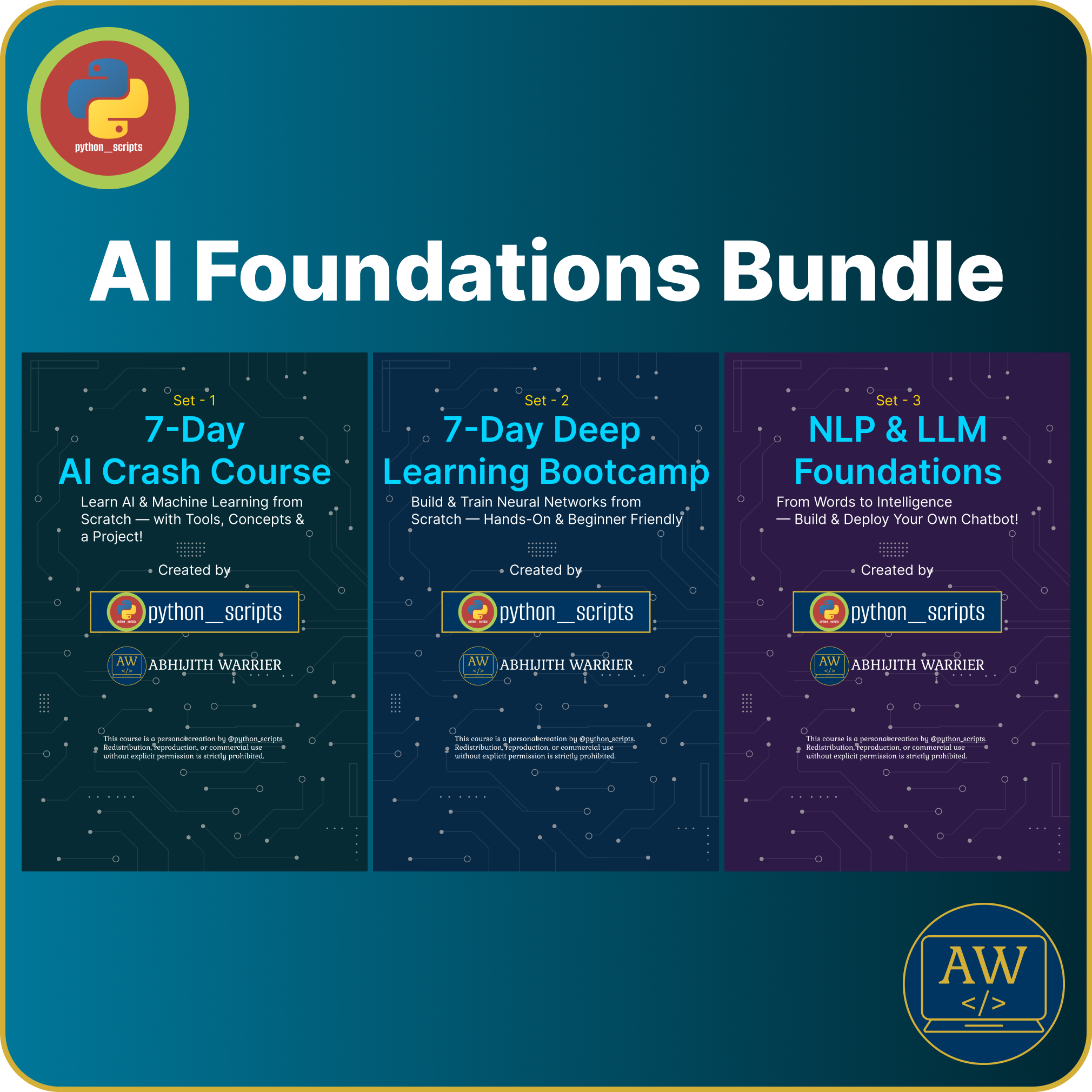
AI Foundations Bundle — From AI Basics to Deep Learning & NLP
Learn AI the right way — from core concepts to deep learning and language models, all in one structured bundle.
Ideal for beginners and developers who want a complete AI roadmap without confusion.
No comments yet. Be the first to comment!