AI Insights: The Hidden Cost of Running LLMs in Production
Introduction:
Large Language Models are easy to demo and deceptively easy to ship. A few API calls, a working prompt, and suddenly a product feels “AI-powered.” The real complexity begins only after the first users arrive.
Teams often discover that the cost of running LLMs in production extends far beyond model usage fees. Latency, retries, data movement, observability, human oversight, and infrastructure choices quietly add up. What looked affordable in a proof-of-concept can become expensive, unpredictable, and operationally fragile at scale.
This blog looks at the hidden costs of running LLMs in production — not just financial, but architectural and organizational — and why teams underestimate them.
Model Usage Cost Is Only the Starting Point:
The most visible cost is usually token usage. Teams estimate prompts, responses, and request volume, then assume they understand the spend.
In practice, token cost is just the base layer. Production systems introduce:
- retries due to timeouts or failures
- prompt growth as features evolve
- longer context windows to improve quality
- multiple calls per user interaction
These factors compound quietly. What starts as a single request per action often becomes several chained calls, each adding cost and latency.
Latency Forces Architectural Trade-Offs:
LLMs introduce latency that traditional systems were not designed around. Even small delays become noticeable in user-facing flows.
To compensate, teams add:
- caching layers
- async workflows
- background processing
- speculative execution
Each optimisation improves experience, but also increases system complexity. Latency is not just a performance issue — it reshapes architecture. Systems that once relied on synchronous request-response patterns often need redesign to accommodate AI-driven delays.
Infrastructure Costs Grow Around the Model:
Running LLMs in production rarely involves only the model endpoint. Supporting infrastructure adds its own cost footprint.
Common additions include:
- vector databases for retrieval
- embedding pipelines
- feature stores
- orchestration and scheduling services
- monitoring and logging systems
These components are necessary for quality and reliability, but they shift the cost profile from “API usage” to “platform operation.” Over time, infrastructure costs can rival or exceed model costs.
Reliability Requires Redundancy and Fallbacks:
LLMs are probabilistic systems. They fail differently from traditional services, and they fail more often than teams expect.
Production systems compensate by adding:
- fallback models
- rule-based backups
- confidence thresholds
- human review paths
Each safeguard improves reliability, but none are free. Redundancy increases both cost and operational burden. Teams that ignore this early often end up firefighting later.
Observability Is More Expensive Than It Looks:
Debugging LLM behaviour is fundamentally harder than debugging deterministic code. To understand failures, teams log prompts, responses, tool calls, and decisions.
This creates new cost centers:
- increased log volume
- sensitive data handling
- storage and retention costs
- analysis and audit tooling
Observability is essential for trust and compliance, but it introduces ongoing operational expense. Skipping it saves money short-term and costs far more later.
Human-in-the-Loop Is a Cost, Not a Temporary Phase:
Many teams assume human review is a temporary measure until models improve. In practice, human-in-the-loop often becomes a permanent part of production systems.
Human oversight is needed for:
- edge cases
- high-risk actions
- regulatory compliance
- quality assurance
This introduces staffing costs and workflow complexity. AI does not eliminate human involvement — it changes where and how it happens.
Data Movement and Privacy Add Friction:
Production LLM systems move data across boundaries: user inputs, internal context, retrieved documents, and generated outputs.
Each movement introduces:
- network costs
- latency
- security considerations
- compliance overhead
As regulations tighten, teams invest more in data minimisation, redaction, and access controls. These are necessary investments, but they are rarely accounted for in early cost estimates.
Cost Predictability Is the Real Challenge:
Perhaps the most difficult aspect of running LLMs in production is not cost itself, but cost predictability.
Usage patterns change. Prompts evolve. Models are updated. What was cheap last month may not be cheap next quarter.
Teams that succeed treat LLM costs as:
- a monitored metric
- an architectural constraint
- a product design consideration
Cost-aware design becomes as important as performance-aware design.
The Maturity Curve Is Steeper Than It Looks:
The hidden cost of LLMs is ultimately about maturity. Early wins come quickly. Sustainable systems take time, discipline, and trade-offs.
Production-grade LLM systems demand:
- architectural clarity
- operational rigor
- realistic expectations
Teams that acknowledge these costs early design better systems. Teams that ignore them often discover limits only after scale forces the issue.
Conclusion:
Running LLMs in production is not just a question of API pricing. It is a system-level commitment that touches architecture, operations, security, and people.
The real cost of LLMs lies in everything required to make them reliable, observable, and trustworthy at scale. Teams that recognize this early can plan accordingly and build systems that last. Those who don’t often pay the price later — in complexity, instability, and surprise bills.
LLMs are powerful tools. Treating them as infrastructure, not features, is the difference between experimentation and sustainable value.
References:
Comments
Add Your Comment
Related Posts

AI Insights: When NOT to Use Generative AI in Enterprise Systems
0 30
AI in Production: AI Observability — Monitoring Models, Prompts, and Drift
0 33
AI in Production: AI Failures in Production — What Went Wrong
0 82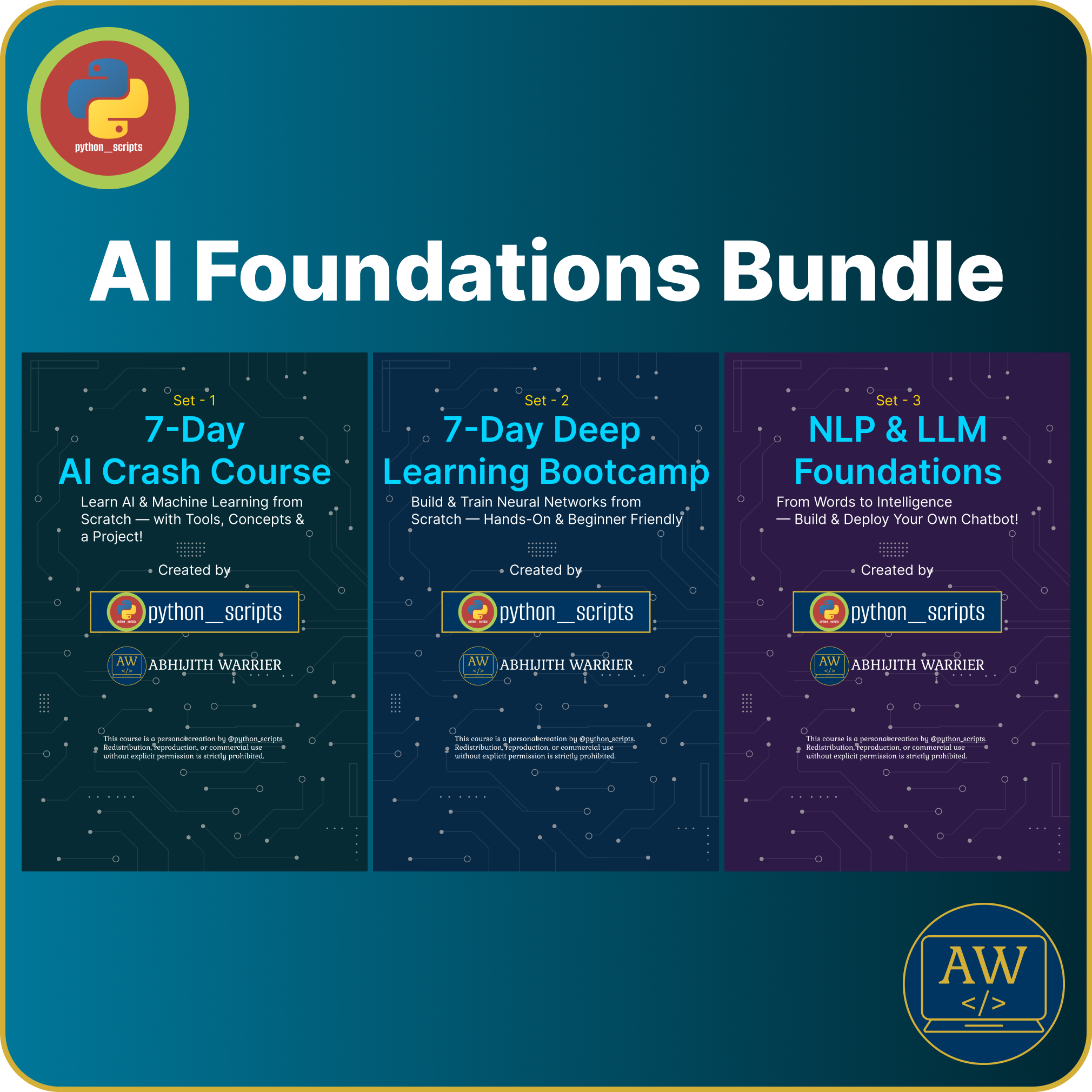
AI Foundations Bundle — From AI Basics to Deep Learning & NLP
Learn AI the right way — from core concepts to deep learning and language models, all in one structured bundle.
Ideal for beginners and developers who want a complete AI roadmap without confusion.
No comments yet. Be the first to comment!