AI in Production: AI Failures in Production — What Went Wrong
Introduction:
Most AI failures don’t happen because models are fundamentally bad. They happen because systems assume models are better than they actually are.
In demos, AI behaves predictably. In production, inputs drift, constraints tighten, and edge cases become the norm. When failures occur, teams often blame the model — but the real issues usually sit elsewhere.
Understanding what went wrong requires looking beyond accuracy scores.
The Problem Wasn’t the Model — It Was the Assumption:
Many AI systems fail because they’re built on optimistic assumptions.
Teams assume data will look like training data. They assume confidence correlates with correctness. They assume edge cases are rare. None of these assumptions hold for long in real environments.
Production systems punish hidden assumptions quickly.
Data Drift Went Unnoticed:
One of the most common failure modes is silent data drift.
Inputs change gradually — user behavior shifts, upstream systems evolve, formats get tweaked. Models continue producing outputs, but their accuracy degrades over time.
Without explicit monitoring, drift isn’t detected until users complain or incidents occur.
Confidence Was Mistaken for Correctness:
AI systems often fail loudly because they fail confidently.
Models rarely surface uncertainty unless explicitly designed to. When systems treat every output as equally trustworthy, bad decisions propagate without friction.
Failures escalate when there’s no mechanism to slow down, question, or override incorrect outputs.
Human-in-the-Loop Was Removed Too Early:
In many failed systems, humans were initially part of the workflow — and then removed for efficiency.
Latency goals tightened. Costs grew. Automation looked attractive.
Removing human checkpoints increased speed, but also removed the last line of defense. When things went wrong, there was no graceful fallback.
Edge Cases Became the Majority:
What teams label as “edge cases” often represent real user behavior.
Rare inputs compound at scale. Ambiguous requests become common. Users behave in ways training data didn’t anticipate.
Systems that aren’t designed to handle ambiguity fail not because of rare events, but because reality is messy.
Operational Readiness Was an Afterthought:
Many AI systems ship without production-grade safeguards.
Missing alerting, limited logging, and poor observability make failures hard to diagnose. When incidents occur, teams scramble without enough signal to understand what happened.
Operational gaps turn recoverable issues into prolonged outages.
Metrics Optimized the Wrong Outcomes:
Teams often optimize for metrics that look good on dashboards but don’t reflect real impact.
Accuracy improves while user trust declines. Latency drops while decision quality worsens. Cost optimizations remove safety margins.
When metrics don’t align with outcomes, systems drift toward failure.
Why These Failures Keep Repeating:
AI failures repeat because they’re systemic, not accidental.
They emerge from incentives to ship quickly, reduce costs, and demonstrate automation. The same pressures produce the same blind spots across teams and organizations.
Until systems are designed with failure in mind, history repeats itself.
What Successful Teams Do Differently:
Teams that avoid these failures design for imperfection.
They expect drift. They treat confidence as a signal, not a truth. They preserve human judgment where it matters. They invest in observability early.
Most importantly, they assume the system will be wrong — and plan accordingly.
Conclusion:
AI failures in production rarely come from bad models. They come from fragile systems built around unrealistic expectations.
When teams acknowledge uncertainty, preserve human oversight, and design for recovery, AI systems become more resilient.
Production success isn’t about preventing failure. It’s about surviving it gracefully.
Comments
Add Your Comment
Related Posts

AI Insights: When NOT to Use Generative AI in Enterprise Systems
0 30
AI in Production: AI Observability — Monitoring Models, Prompts, and Drift
0 33
AI in Production: Human-in-the-Loop Systems — Where AI Must Stop
0 83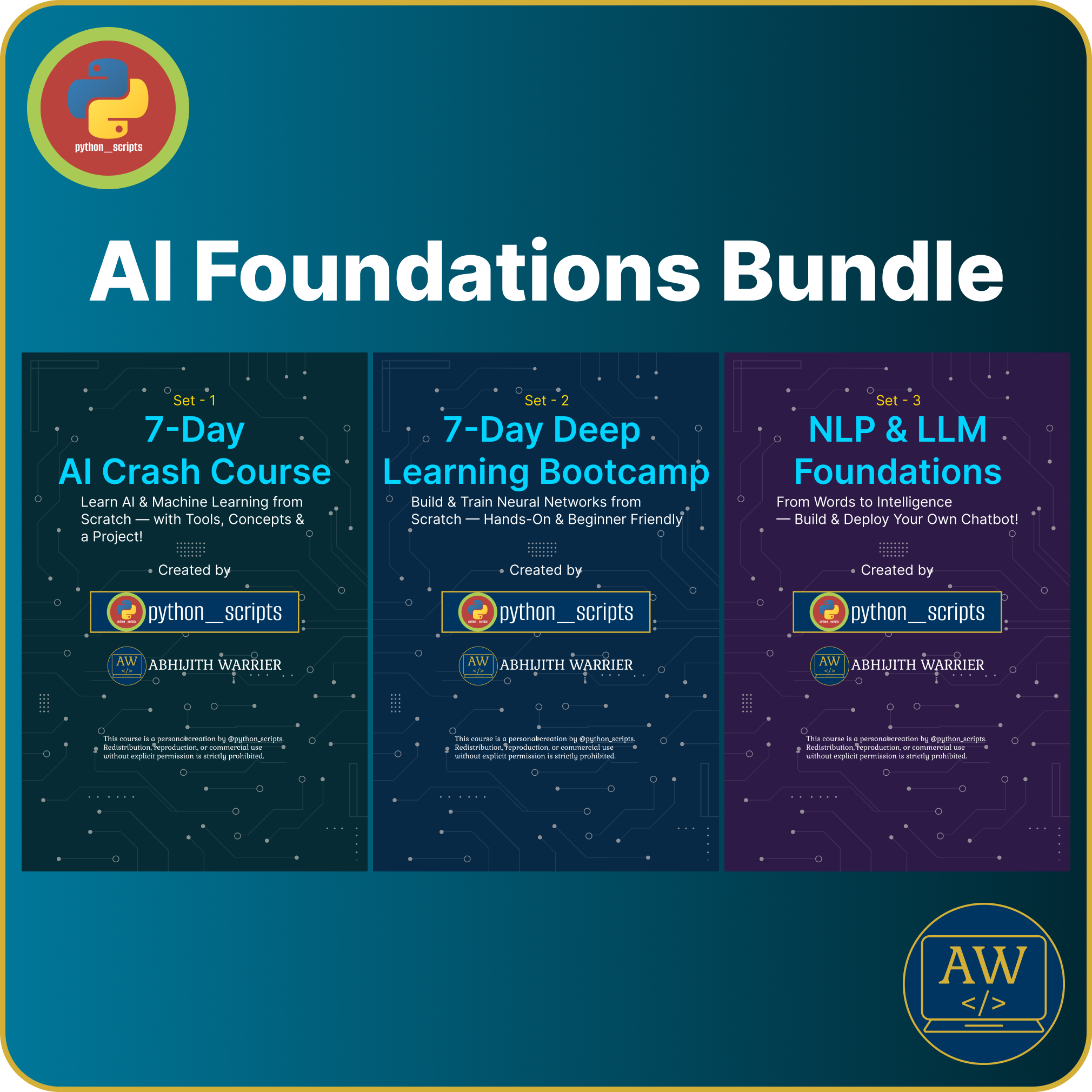
AI Foundations Bundle — From AI Basics to Deep Learning & NLP
Learn AI the right way — from core concepts to deep learning and language models, all in one structured bundle.
Ideal for beginners and developers who want a complete AI roadmap without confusion.
No comments yet. Be the first to comment!