Security Realities: Security Reviews That Actually Improve Systems
Introduction:
Security reviews are often treated as checkpoints. A document gets filled, a meeting happens, a few risks are noted, and the project moves forward.
When handled this way, security reviews become procedural — necessary, but disconnected from real system improvement.
The most effective security reviews don’t just identify vulnerabilities. They improve how systems are designed, deployed, and operated.
Security Reviews Should Happen Before Code Is Frozen:
Many security reviews occur too late.
When systems are already implemented, reviewers are limited to spotting issues rather than influencing design. This often leads to patch-style fixes instead of structural improvements.
Early security conversations shape boundaries, identity models, data flows, and trust assumptions — decisions that are far harder to change later.
Threat Modeling Is More Valuable Than Checklists:
Checklists catch common issues. They don’t reveal systemic risk.
Threat modeling forces teams to think about how their system could be misused, not just misconfigured. It shifts the focus from “Are we compliant?” to “What could realistically go wrong?”
This mindset leads to stronger designs than static controls alone.
Identity and Access Deserve the Most Attention:
In modern systems, identity is the control plane.
Who can access what? Under which conditions? For how long? Poor answers to these questions are behind many real-world breaches.
Security reviews that focus deeply on identity models and permission boundaries provide lasting value, because access mistakes scale quickly.
Data Flow Clarity Prevents Hidden Risk:
Systems often grow organically. Data flows expand without being revisited.
Effective security reviews map data movement clearly:
- where data enters
- where it is stored
- how it is transmitted
- who can access it
- how long it is retained
Unclear data flow is one of the most common sources of unnoticed risk.
Operational Reality Must Be Considered:
Security doesn’t stop at design.
Reviews should ask:
- How are incidents detected?
- How are credentials rotated?
- What happens during a breach?
- Who owns recovery?
Controls that exist only on paper rarely survive operational stress.
Reviews Should Strengthen Teams, Not Create Fear:
Security reviews fail when they become adversarial.
If engineers view them as gatekeeping exercises, they optimize for passing instead of improving. Healthy reviews feel collaborative. They aim to strengthen the system, not to assign blame.
Trust improves security outcomes more than pressure does.
Security Is a Continuous Practice, Not a Phase:
One-time reviews create temporary confidence.
Systems evolve. New features introduce new risk. Dependencies change. Without periodic reassessment, yesterday’s safe system becomes today’s vulnerability.
Security reviews should be part of the lifecycle, not a milestone.
Good Reviews Make Systems Simpler:
Strong security design often simplifies systems.
Clear boundaries, minimal permissions, explicit ownership, and predictable data flows reduce both attack surface and cognitive load.
Security improvements that also improve clarity are the ones that last.
Conclusion:
Security reviews that actually improve systems go beyond surface-level compliance.
They influence architecture early, focus on identity and data flow, consider operational reality, and build trust across teams. When treated as collaborative design exercises, they strengthen systems in ways that persist long after the review ends.
Security isn’t about blocking change. It’s about shaping it responsibly.
Comments
Add Your Comment
Related Posts
Security Realities: Securing Internal APIs — The Forgotten Attack Surface
0 10
Security Realities: Why Most AWS Security Breaches Are Configuration Issues?
0 95
Security Insights: API Observability – Monitoring What Happens Beyond 200 OK
0 113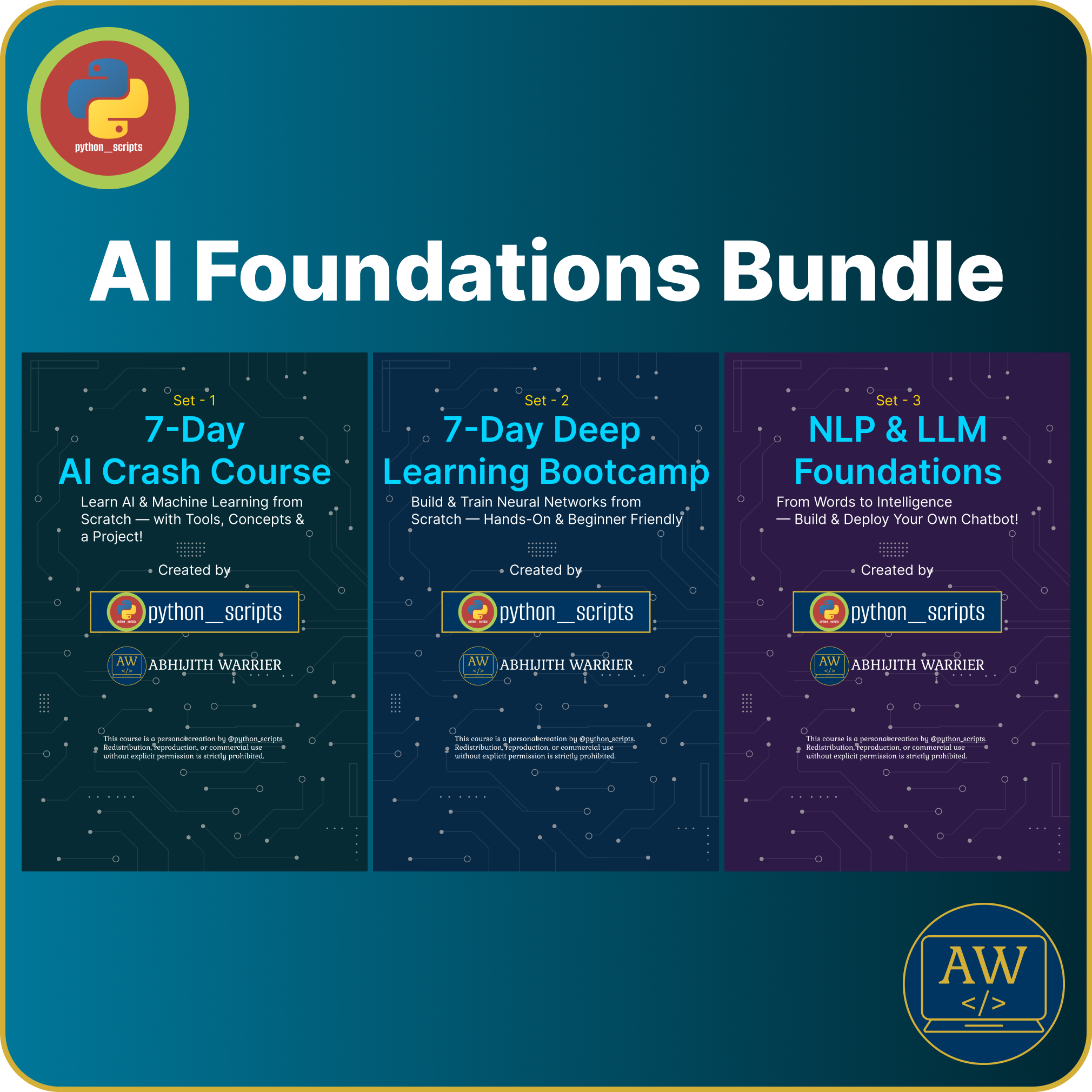
AI Foundations Bundle — From AI Basics to Deep Learning & NLP
Learn AI the right way — from core concepts to deep learning and language models, all in one structured bundle.
Ideal for beginners and developers who want a complete AI roadmap without confusion.
No comments yet. Be the first to comment!