Systems Realities: State Management in Distributed Systems — The Hard Truths
Introduction:
State is what makes systems useful — and what makes them difficult.
In a single process, managing state is straightforward. Data lives in memory or a database, updates are predictable, and consistency is easy to reason about.
In distributed systems, state becomes fragmented, delayed, and sometimes contradictory. The moment data is spread across services, regions, or replicas, managing it correctly becomes one of the hardest problems in engineering.
The difficulty isn’t just technical. It’s conceptual.
State Is No Longer Singular:
In distributed systems, there is no single “source of truth” at every moment.
Multiple services may hold copies of the same data. Caches, replicas, and derived views all represent state at different points in time.
This means that two parts of the system can legitimately disagree — and both can be “correct” based on their view of the world.
Understanding this is the first step toward designing reliable systems.
Consistency Is Always a Trade-off:
Strong consistency simplifies reasoning.
But in distributed environments, enforcing it requires coordination, which introduces latency and reduces availability. Systems must choose between consistency, availability, and performance depending on their needs.
Eventual consistency is often the practical choice — but it requires accepting temporary contradictions and designing systems that can tolerate them.
State Transitions Are Harder Than State Storage:
Storing data is relatively easy.
Managing how state changes over time is much harder. Race conditions, retries, partial failures, and concurrent updates all complicate transitions.
Ensuring that state evolves correctly under these conditions requires careful design, not just reliable storage.
Retries and Idempotency Are Not Optional:
Failures are inevitable.
Requests may be retried. Messages may be delivered more than once. Without idempotency, repeated operations can corrupt state or produce unintended side effects.
Designing systems where operations can be safely repeated is essential for maintaining consistency in unreliable environments.
Distributed Systems Introduce Time as a Variable:
Time is not uniform across systems.
Clock differences, network delays, and asynchronous processing mean that events are observed in different orders across services. What appears as “latest” in one system may not be so in another.
Relying on time-based assumptions without safeguards often leads to subtle bugs.
Derived State Can Drift:
Many systems maintain derived state for performance or usability.
Aggregations, caches, search indexes, and analytics tables all represent transformations of base data. These derived states can drift if updates are missed, delayed, or processed incorrectly.
Keeping derived data aligned with source data is an ongoing challenge.
Debugging Becomes a Reconstruction Problem:
When issues occur, understanding what happened is difficult.
State is distributed across logs, services, and databases. Events may be processed out of order. Observability tools provide partial views.
Debugging requires reconstructing a timeline from incomplete information — often under pressure.
Simplicity Helps More Than Cleverness:
Complex state management strategies can introduce more problems than they solve.
Clear data ownership, well-defined boundaries, and predictable flows make systems easier to reason about. Simpler approaches may sacrifice some flexibility but improve reliability.
In distributed systems, clarity often outperforms sophistication.
The Goal Is Not Perfect Consistency:
Perfect consistency across all parts of a distributed system is rarely achievable.
The goal is to define acceptable levels of inconsistency and ensure the system behaves correctly within those boundaries. This includes designing compensating actions, reconciliation processes, and user-facing safeguards.
Systems succeed when they handle inconsistency gracefully.
Conclusion:
State management is the hardest part of distributed systems because it forces teams to deal with uncertainty, time, and partial truth.
There is no universal solution. Every system makes trade-offs based on its requirements. Understanding these trade-offs — and designing for them explicitly — is what separates resilient systems from fragile ones.
In distributed systems, managing state is less about control and more about tolerance.
Comments
Add Your Comment
Related Posts

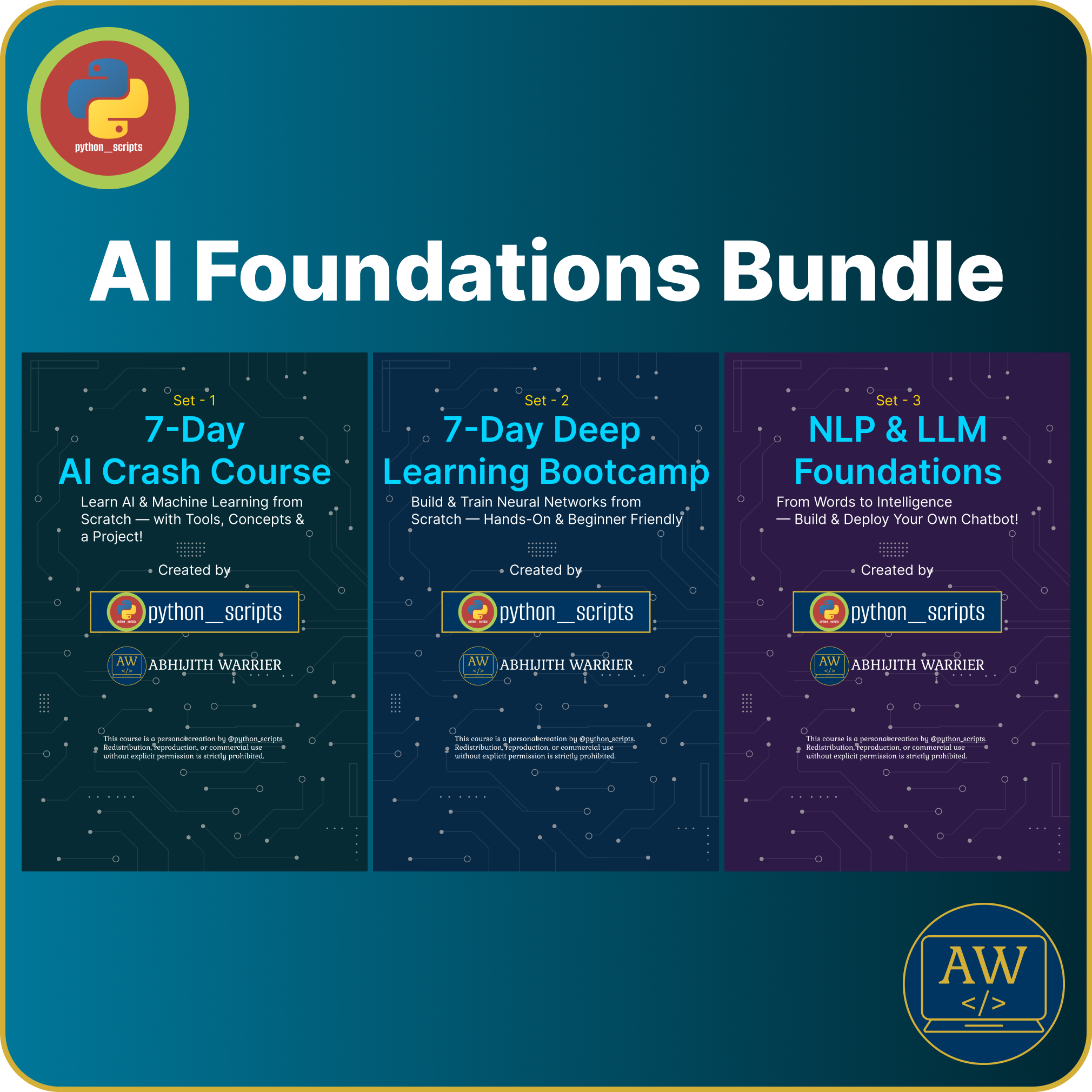
AI Foundations Bundle — From AI Basics to Deep Learning & NLP
Learn AI the right way — from core concepts to deep learning and language models, all in one structured bundle.
Ideal for beginners and developers who want a complete AI roadmap without confusion.
No comments yet. Be the first to comment!