
Architecture Realities: When Event-Driven Architectures Backfire
Introduction:
Event-driven architecture is often presented as a natural evolution for scalable systems.
Decoupled services, asynchronous processing, and flexible workflows make it attractive for handling complex, distributed applications. Many teams adopt event-driven patterns expecting increased resilience and faster iteration.
In practice, event-driven systems can introduce a different kind of complexity.
When applied without clear boundaries and understanding, they can make systems harder to reason about, debug, and maintain.
Decoupling Can Reduce Clarity:
Event-driven systems remove direct dependencies between services.
While this improves flexibility, it also removes visibility. Instead of explicit calls, behavior is triggered indirectly through events. Understanding how a change propagates requires tracing multiple consumers and flows.
Without strong documentation and observability, systems become difficult to reason about.
Event Flows Become Hard to Trace:
In synchronous systems, request paths are visible.
In event-driven systems, a single action may trigger multiple downstream events, each producing further side effects. These chains are often asynchronous and non-linear.
When something goes wrong, reconstructing the flow becomes a challenge. Debugging turns into tracing distributed event paths across services and time.
Ordering and Consistency Are Not Guaranteed:
Events do not always arrive in order.
Network delays, retries, and parallel processing can change the sequence in which events are handled. Systems that assume ordering may produce inconsistent or incorrect state.
Handling out-of-order events requires additional logic, which increases system complexity.
Duplicate Events Are Inevitable:
In distributed systems, at-least-once delivery is common.
This means events may be processed multiple times. Without idempotent consumers, duplicate processing can lead to incorrect state, repeated actions, or data corruption.
Designing for idempotency is essential but often overlooked early.
Error Handling Becomes Distributed:
Failures in event-driven systems do not propagate directly.
Instead of immediate failures, issues may appear as delayed or missing effects. A failed consumer may silently stop processing events while producers continue emitting them.
This separation makes it harder to detect and handle failures consistently.
Schema Evolution Is Difficult to Manage:
Events often act as contracts between producers and consumers.
Changing event structures requires careful coordination. Older consumers may not handle new formats correctly, while newer consumers may expect fields that older producers do not provide.
Without versioning strategies, schema changes can break systems in subtle ways.
Operational Overhead Increases:
Event-driven architectures introduce additional components.
Message brokers, queues, streams, and consumers all require monitoring, scaling, and maintenance. Operational complexity grows with each new event flow.
Managing these systems requires maturity in observability and incident response.
Not All Workloads Benefit from Events:
Event-driven design is powerful for asynchronous, decoupled workflows.
However, for simple, request-response operations, it may introduce unnecessary complexity. Synchronous systems are often easier to implement, debug, and maintain when strict sequencing or immediate feedback is required.
Choosing the right pattern matters more than following trends.
When Event-Driven Architectures Work Well:
Event-driven systems succeed when:
- workflows are naturally asynchronous
- services are loosely coupled
- eventual consistency is acceptable
- observability is strong
Without these conditions, the benefits are reduced and the costs become more visible.
Conclusion:
Event-driven architectures are not inherently better or worse than other approaches. They are a trade-off.
When used appropriately, they enable flexibility and scalability. When applied indiscriminately, they introduce complexity that can outweigh their benefits.
The key is not adopting event-driven patterns by default, but understanding when they align with system needs.
Comments
Add Your Comment
Related Posts
Architecture Realities: Why Simpler Architectures Often Win at Scale
0 45
Architecture Realities: Designing Systems for Teams, Not Just Traffic
0 100
Architecture Realities: Scaling Isn’t the Hard Part – Maintaining Systems Is
0 93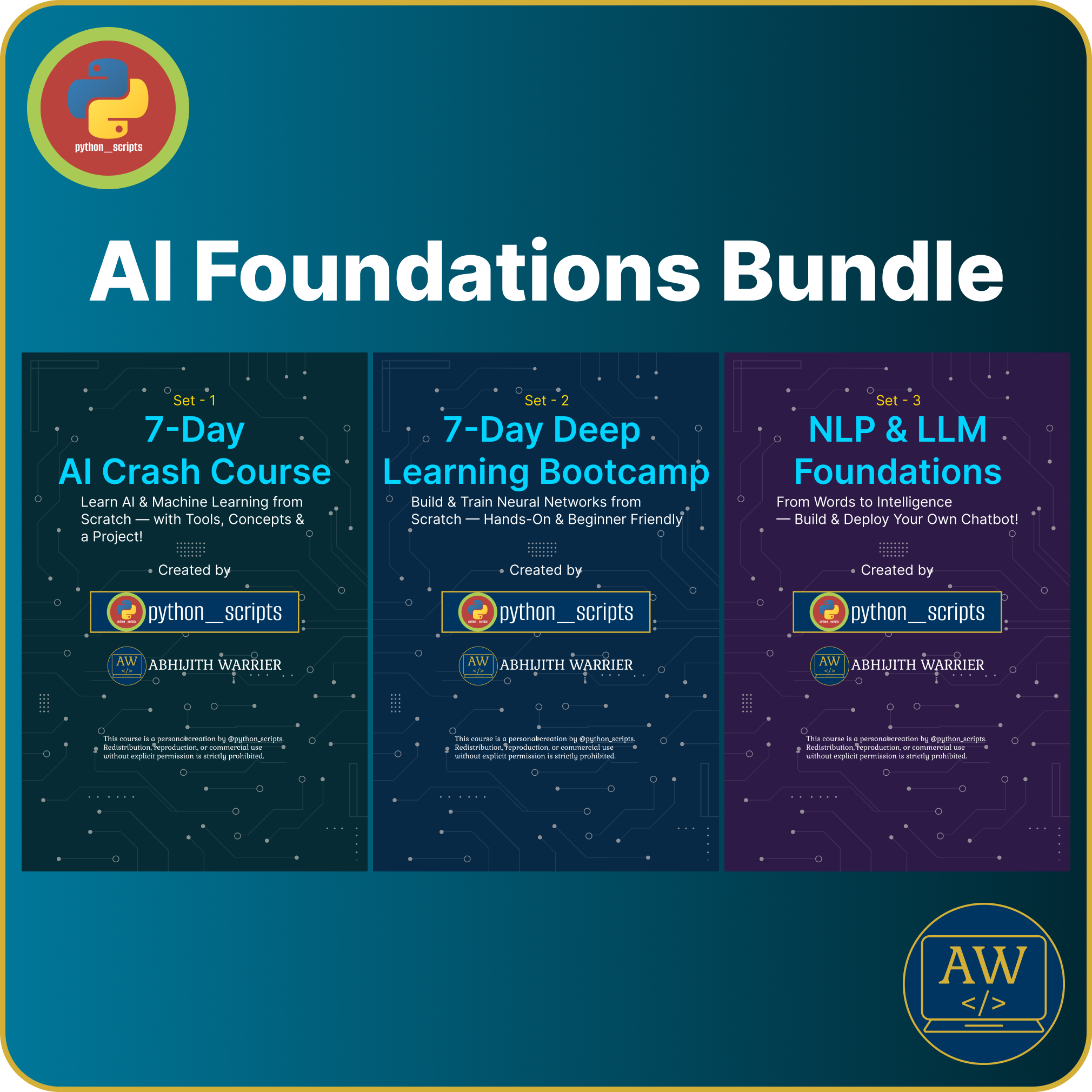
AI Foundations Bundle — From AI Basics to Deep Learning & NLP
Learn AI the right way — from core concepts to deep learning and language models, all in one structured bundle.
Ideal for beginners and developers who want a complete AI roadmap without confusion.
No comments yet. Be the first to comment!