AWS in Production: Serverless Observability — Debugging Distributed Functions in Production
Introduction:
Serverless architectures simplify deployment and scaling.
Functions execute on demand, infrastructure is abstracted away, and teams can focus on business logic. But this abstraction introduces a new challenge — understanding what actually happens when things go wrong.
In traditional systems, debugging often starts with a server, a process, or a log stream. In serverless systems, execution is fragmented across functions, events, and services.
Observability becomes the only way to reconstruct reality.
Execution Is No Longer Linear:
In serverless systems, a single user action can trigger multiple functions.
An API call may invoke a function, which emits an event, which triggers another function, and so on. These chains are asynchronous and distributed.
There is no single execution path to follow. Understanding behaviour requires tracing across multiple services and events.
Logs Are Fragmented Across Functions:
Each function generates its own logs.
Logs are isolated per invocation and may exist across multiple services. Without correlation, it is difficult to connect related events.
A failure in one function may appear disconnected from its cause in another, making debugging slower and more complex.
Tracing Is Essential, Not Optional:
Distributed tracing provides visibility across function boundaries.
By linking requests, events, and downstream calls, tracing helps reconstruct end-to-end flows. Without it, teams rely on manual correlation of logs, which is error-prone and time-consuming.
In serverless systems, tracing is the closest thing to a system-wide view.
Cold Starts Add Unpredictability:
Serverless functions may experience cold starts.
Execution delays vary depending on function configuration, runtime, and traffic patterns. These delays can impact latency-sensitive workflows and are often inconsistent.
Observability must capture these variations to distinguish between normal behaviour and performance issues.
Failures Are Often Indirect:
In serverless architectures, failures don’t always propagate clearly.
A failed function may not immediately impact the user-facing response. Instead, it may cause downstream effects — missing data, delayed processing, or incomplete workflows.
Detecting these failures requires monitoring not just errors, but outcomes.
Event Sources Complicate Debugging:
Serverless systems rely heavily on event sources.
Queues, streams, and triggers introduce buffering, retries, and asynchronous execution. Messages may be delayed, retried, or processed out of order.
Debugging requires understanding not just functions, but the behaviour of the event sources themselves.
Metrics Must Reflect Behaviour, Not Just Errors:
Error rates alone are insufficient.
Successful executions may still produce incorrect results. Latency spikes, retry rates, and processing delays provide better insight into system health.
Observability should focus on how the system behaves, not just whether it fails.
Context Propagation Is Critical:
Without shared context, debugging becomes guesswork.
Request IDs, correlation IDs, and metadata must travel across functions and services. This allows logs and traces to be connected meaningfully.
Without consistent context propagation, observability tools lose effectiveness.
Designing for Observability from the Start:
Observability cannot be added later.
Instrumentation, tracing, structured logging, and meaningful metrics must be part of system design. Retrofitting observability into a distributed serverless system is significantly harder.
Systems that are designed for observability are easier to operate and evolve.
Conclusion:
Serverless architectures remove infrastructure complexity but introduce observability challenges.
Debugging distributed functions requires visibility across execution paths, events, and services. Without strong observability, systems become opaque and difficult to manage.
In serverless systems, understanding behaviour is not optional. It is the foundation of reliability.
Comments
Add Your Comment
Related Posts
AWS in Production: AWS Cost Anomalies — Detecting Spikes Before Finance Does
0 26
AWS in Production: Cloud Governance — Balancing Speed, Cost, and Control
0 30
AWS Architecture: Multi-Region Data Consistency — What Breaks First
0 92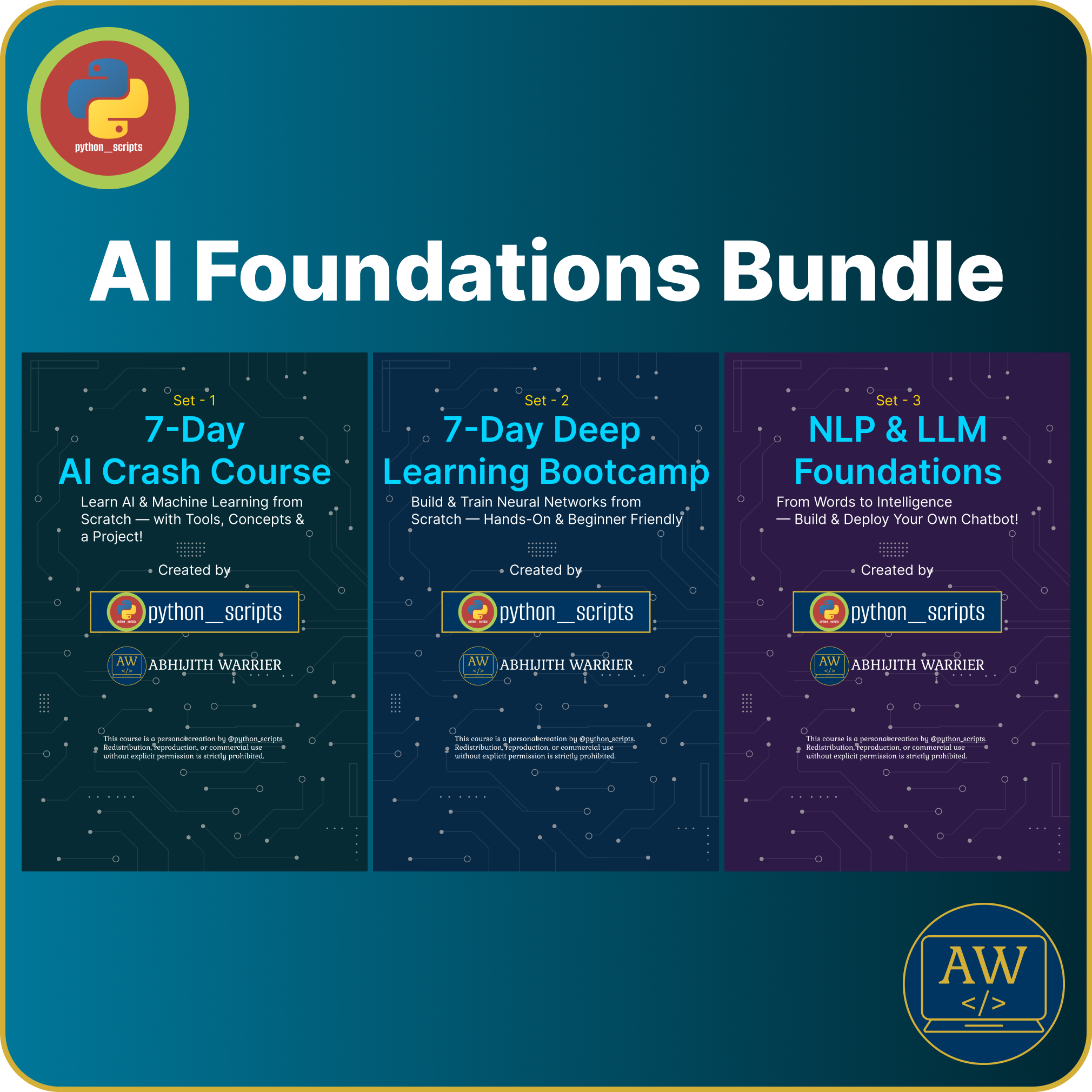
AI Foundations Bundle — From AI Basics to Deep Learning & NLP
Learn AI the right way — from core concepts to deep learning and language models, all in one structured bundle.
Ideal for beginners and developers who want a complete AI roadmap without confusion.
No comments yet. Be the first to comment!