AI Insights: Why AI Systems Fail Silently (And How to Catch Them)
Introduction:
Most system failures are loud.
Errors spike, alerts fire, and something clearly breaks. AI systems behave differently. They often fail quietly — continuing to respond, returning outputs, and appearing “healthy” while correctness degrades underneath.
This makes them more dangerous.
Silent failures don’t trigger immediate response. They erode trust gradually, producing incorrect decisions that may go unnoticed until the impact becomes significant.
Understanding why AI systems fail silently is the first step toward detecting them early.
Success Metrics Don’t Capture Correctness:
Traditional system metrics focus on availability and performance.
Requests succeed. Latency looks normal. Error rates remain low. From an infrastructure perspective, everything appears fine.
But AI systems can return incorrect outputs without triggering any of these signals. A system can be “up” while producing consistently wrong results.
This disconnect is the root of silent failure.
Data Drift Happens Without Deployments:
Unlike traditional software, AI systems change behaviour over time.
User inputs evolve. External systems change formats. New patterns emerge in data. Even without code changes, model performance can degrade.
This drift is gradual, making it difficult to detect through standard monitoring.
Confidence Masks Uncertainty:
AI models often present outputs with high confidence.
Even when the model is unsure, the output may appear coherent and convincing. Systems that treat outputs as inherently trustworthy amplify this issue.
Without mechanisms to detect uncertainty, incorrect results propagate silently.
Feedback Loops Are Often Missing:
Many AI systems lack direct feedback.
Users may not report incorrect outputs. Even when they do, the signal may not reach engineering teams quickly. Without feedback loops, systems continue operating with degraded performance.
Silence is not an indicator of correctness — it is often a lack of visibility.
Edge Cases Become Common in Production:
Training environments rarely capture full real-world variability.
In production, edge cases accumulate:
- ambiguous inputs
- unexpected formats
- novel user behaviour
These cases stress the system continuously, increasing the likelihood of incorrect outputs without obvious failure signals.
Downstream Impact Is Hard to Trace:
AI outputs often feed into other systems.
An incorrect recommendation, classification, or decision may trigger downstream actions. By the time the issue becomes visible, the original source is difficult to identify.
Silent failures propagate through the system, making root cause analysis harder.
How to Detect Silent Failures Early:
Catching silent failures requires monitoring beyond infrastructure metrics.
Effective signals include:
- output quality checks and sampling
- user corrections and overrides
- drift detection on input and output distributions
- unexpected changes in business metrics
These signals focus on behaviour, not just execution.
Human-in-the-Loop Provides Early Signals:
Human oversight is not just a safeguard.
It is a detection mechanism. Increased review rates, frequent overrides, or rising disagreement between humans and the system indicate potential degradation.
Systems that include human feedback loops detect issues earlier.
Designing for Observability from the Start:
AI observability must be intentional.
Tracking model versions, prompt changes, input distributions, and output behaviour provides context for detecting issues. Without this, changes in system behaviour remain unexplained.
Observability transforms silent failures into visible patterns.
Conclusion:
AI systems fail silently because their failures are not technical errors — they are behavioural deviations.
Systems that monitor only availability and latency miss the most important signals. Detecting silent failures requires focusing on outputs, feedback, and drift.
In production, the absence of alerts does not mean the system is working. It often means the system is failing quietly.
Comments
Add Your Comment
Related Posts
AI Insights: AI Guardrails — Preventing Hallucinations in Production
0 15
AI Insights: When NOT to Use Generative AI in Enterprise Systems
0 37
AI in Production: AI Observability — Monitoring Models, Prompts, and Drift
0 40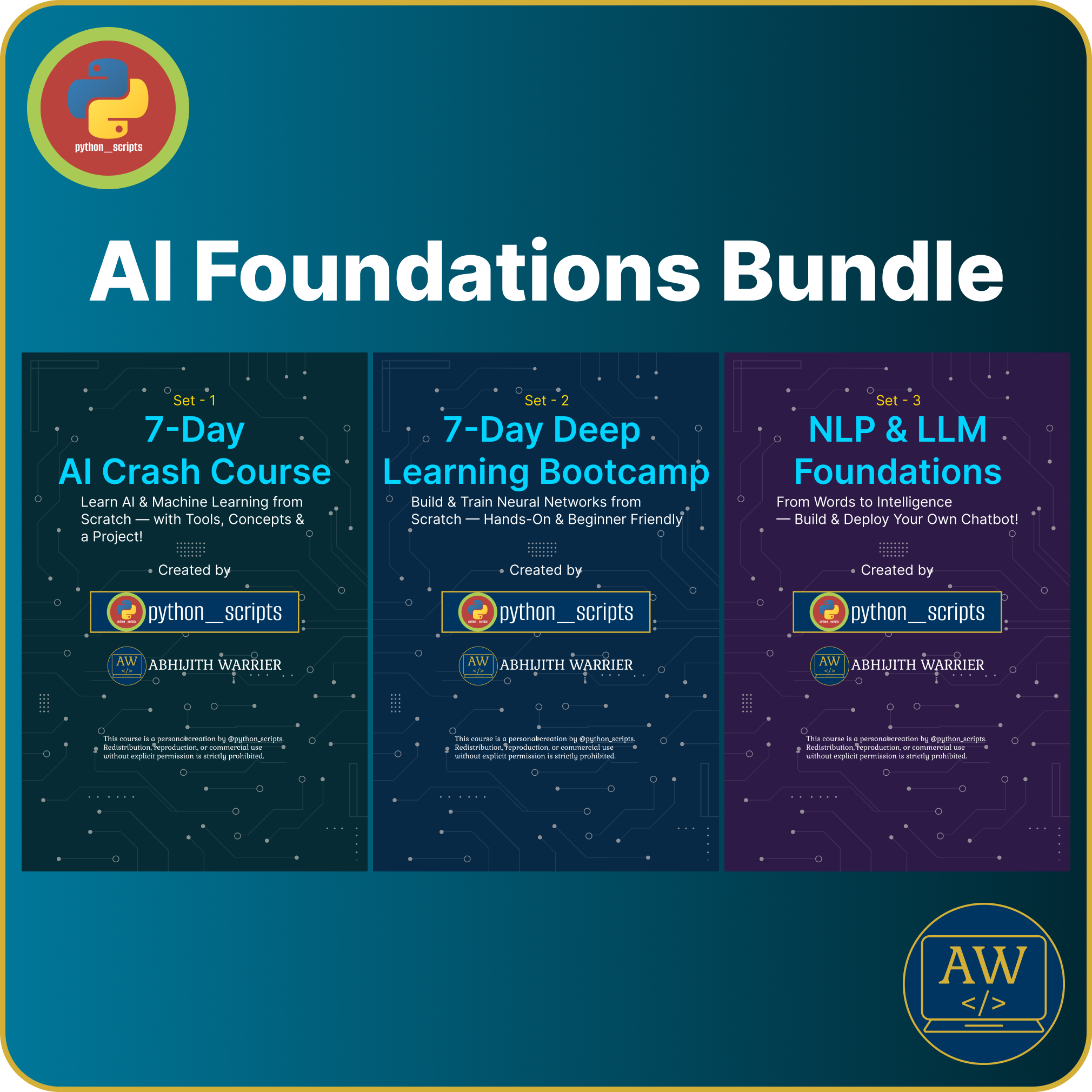
AI Foundations Bundle — From AI Basics to Deep Learning & NLP
Learn AI the right way — from core concepts to deep learning and language models, all in one structured bundle.
Ideal for beginners and developers who want a complete AI roadmap without confusion.
No comments yet. Be the first to comment!