AI in Production: Why AI Proof-of-Concepts Rarely Reach Production
Introduction:
AI proof-of-concepts (POCs) are easy to build and often produce impressive results in controlled environments. With curated datasets and simplified workflows, models can demonstrate clear value during early experimentation.
However, very few of these POCs make it to production systems. The gap between a working demo and a reliable production system is where most AI initiatives struggle.
POCs Are Built in Ideal Conditions:
AI POCs are typically developed using clean, well-structured datasets and controlled assumptions. These environments remove many real-world complexities such as noisy inputs, missing data, and unpredictable usage patterns.
In production, these assumptions break down. Systems must handle variability, edge cases, and scale, which POCs are rarely designed for.
Data Problems Become Visible Later:
Data quality is often underestimated during early experimentation. POCs may rely on static datasets that do not reflect real-world data inconsistencies or drift.
Once deployed, systems must deal with changing data distributions, incomplete records, and integration issues. These problems significantly impact model performance.
Model Accuracy Doesn’t Equal Business Value:
High accuracy in a POC does not guarantee usefulness in production. Metrics measured during experimentation may not align with actual business outcomes or user expectations.
In production, models must deliver consistent, interpretable, and actionable results. Without this alignment, even accurate models fail to create value.
Integration Is Harder Than Modeling:
Building a model is often the easiest part of an AI system. Integrating it into existing workflows, APIs, and systems introduces significant complexity.
Production systems require handling requests, managing dependencies, ensuring scalability, and maintaining reliability. These challenges are often ignored during POCs.
Operational Requirements Are Overlooked:
POCs rarely account for operational concerns such as monitoring, logging, scaling, and failure handling. These aspects are critical for running systems reliably in production.
Without proper observability and operational design, systems become difficult to maintain and debug.
Lack of Ownership Slows Progress:
AI projects often involve multiple teams, including data scientists, engineers, and business stakeholders. Without clear ownership, responsibilities become fragmented.
This lack of ownership delays decision-making and prevents systems from moving beyond experimentation.
Maintenance Is More Expensive Than Expected:
AI systems require continuous updates to remain effective. Models need retraining, data pipelines need maintenance, and system behavior must be monitored over time.
These ongoing costs are often underestimated during the POC phase, making production systems harder to sustain.
Risk and Trust Become Critical in Production:
In production environments, incorrect outputs can have real consequences. Systems must handle uncertainty, avoid hallucinations, and provide reliable results.
Without mechanisms to manage risk and build trust, organizations hesitate to deploy AI systems widely.
The Gap Between Demo and Reality Is Large:
POCs demonstrate possibility, not readiness. They show what can be achieved under ideal conditions but do not account for real-world constraints.
Bridging this gap requires engineering effort, system design, and operational maturity.
Conclusion:
AI POCs fail to reach production not because the models don’t work, but because the systems around them are not designed for real-world use. Production requires handling data variability, integration complexity, and operational challenges.
The focus should shift from building impressive demos to designing systems that can sustain performance over time. That is what turns AI from an experiment into a product.
 Free PDF on this topic
AI/ML Interview Questions
Your essential prep kit for AI/ML interviews.
Free PDF on this topic
AI/ML Interview Questions
Your essential prep kit for AI/ML interviews.
Enjoyed this post?
Stay in the loop
New posts + weekly digest, straight to your inbox.
Create a free account
- Save posts to your vault
- Like posts & build history
- New-post alerts
Comments
Add Your Comment
Related Posts
AI Frontiers: The Proof That Took 167 Years — And an AI
115
AI in Production: When AI Agents Go Off-Script
92
The Rethought — The Math: $3.5 Trillion That Might Not Exist
103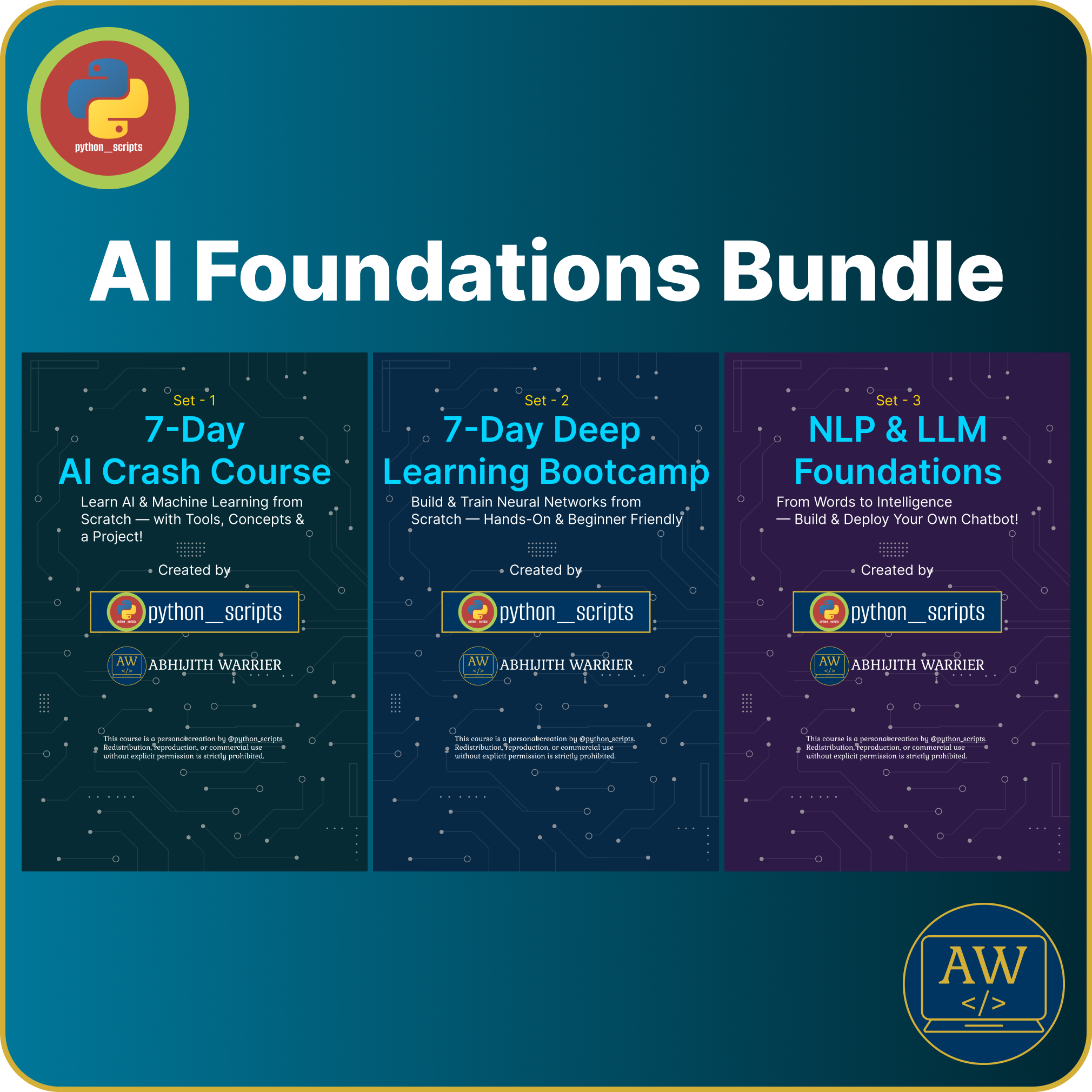
AI Foundations Bundle — From AI Basics to Deep Learning & NLP
Learn AI the right way — from core concepts to deep learning and language models, all in one structured bundle.
Ideal for beginners and developers who want a complete AI roadmap without confusion.
No comments yet. Be the first to comment!