AI Frontiers: The Proof That Took 167 Years — And an AI
In 1859, Bernhard Riemann wrote a paper that changed how mathematicians think about prime numbers. He proposed a hypothesis — now called the Riemann hypothesis — about where certain mathematical objects called the nontrivial zeros of the zeta function sit. They should all lie on a single vertical line, he believed.
He couldn’t prove it. Neither could anyone else. For 167 years.
Earlier this month, OpenAI’s AI did something mathematicians hadn’t managed: it proved the quasi-Riemann hypothesis — a weaker but consequential version of the original — and submitted it for formal verification.
What the Riemann Hypothesis Actually Says
The Riemann zeta function is a mathematical object that encodes information about prime numbers. Primes look random at first glance — 2, 3, 5, 7, 11 — but Riemann showed there’s a deep pattern underneath. His hypothesis says that all the “interesting” zeros of the zeta function lie on a single vertical line in the complex plane, called the critical line.
Why does that matter? Because the location of those zeros controls how evenly primes are distributed. If the hypothesis is true, it puts precise limits on how the primes spread out as numbers get larger. That has downstream consequences in cryptography, number theory, geometry, and theoretical computer science.
It’s been unsolved long enough to become one of the Clay Millennium Prize problems — a list of seven problems with a $1 million prize each. As of last week, one of them has been cracked open — not solved, but closer than it has ever been.
What Quasi-RH Actually Proves
The quasi-Riemann hypothesis doesn’t place every zero on the critical line. It asks something weaker: that all zeros fall within a narrower vertical strip than was previously known.
That sounds like a consolation prize. It isn’t.
Mathematician Maksym Radziwiłł — whose own 2021 formula became a key ingredient in the proof — says that most practical consequences of the full Riemann hypothesis already follow from quasi-RH. Results in number theory, geometry, and theoretical computer science that had been blocked for decades can now be unlocked.
The proof came out in two versions. The first, dated September 30, claimed a tighter bound and was formally verified in Lean — a proof assistant that mechanically checks every logical step. It’s very long and hard to read. The second version, about a week later, claims a slightly weaker bound and hasn’t been formally verified yet, but it’s the one mathematicians have actually been studying. It’s shorter, was edited by a human before release, and experts largely believe it’s correct.
How the AI Did It
The AI didn’t invent new mathematics. What it did was more surprising in some ways: it assembled existing ideas in a combination no human had managed to put together.
The proof draws on metaplectic forms and techniques developed by Radziwiłł and Alexander Dunn. It matched a family of functions that mathematician Peter Sarnak had been advocating for years — and that Henryk Iwaniec had come close to using back in 2002. The ingredients were all sitting in the literature. The AI found how to connect them.
That’s not a trivial thing. Mathematics at this level isn’t just about knowing the tools — it’s about recognizing which tool fits which gap, at which moment, in a chain of reasoning that can stretch across hundreds of pages.
What This Means — and What It Doesn’t
“Nothing would surprise me at this point.”
— Thomas Bloom, mathematician
Sarnak wants every detail checked by humans before anyone declares victory. That’s a reasonable position: a formally verified proof is not the same as a proof that mathematicians understand. The Lean verification confirms the logic holds, but it doesn’t tell you why it holds, or what intuition it’s building on.
The more unsettling question — the one the article doesn’t quite answer — is what happens to the practice of mathematics when proofs get generated faster than they can be understood. A proof you can’t read is still a proof. But mathematics has always been a human conversation, where the value isn’t just the result but the insight that travels with it.
Does this bring the full Riemann hypothesis within reach? Most experts are skeptical. The techniques here don’t obviously extend to putting every zero exactly on the critical line. But a field that just watched a 167-year-old problem fall in a weekend is perhaps not the best place to make confident predictions about what’s impossible.
Final Thought
The quasi-Riemann hypothesis proof matters for the mathematics it unlocks. But it also marks something harder to measure: a moment where AI moved from assisting research to generating it, in a domain where the problems are old, the stakes are high, and the verification is rigorous.
The question now isn’t whether AI can do mathematics. It’s what mathematics becomes when it can.
 Free PDF on this topic
AI/ML Interview Questions
Your essential prep kit for AI/ML interviews.
Enjoyed this post?
Stay in the loop
New posts + weekly digest, straight to your inbox.
Create a free account
- Save posts to your vault
- Like posts & build history
- New-post alerts
Comments
Add Your Comment
Related Posts
AI in Production: When AI Agents Go Off-Script
30
The Rethought — The Math: $3.5 Trillion That Might Not Exist
77
AI in Production: Why AI Systems Need Continuous Evaluation Pipelines
77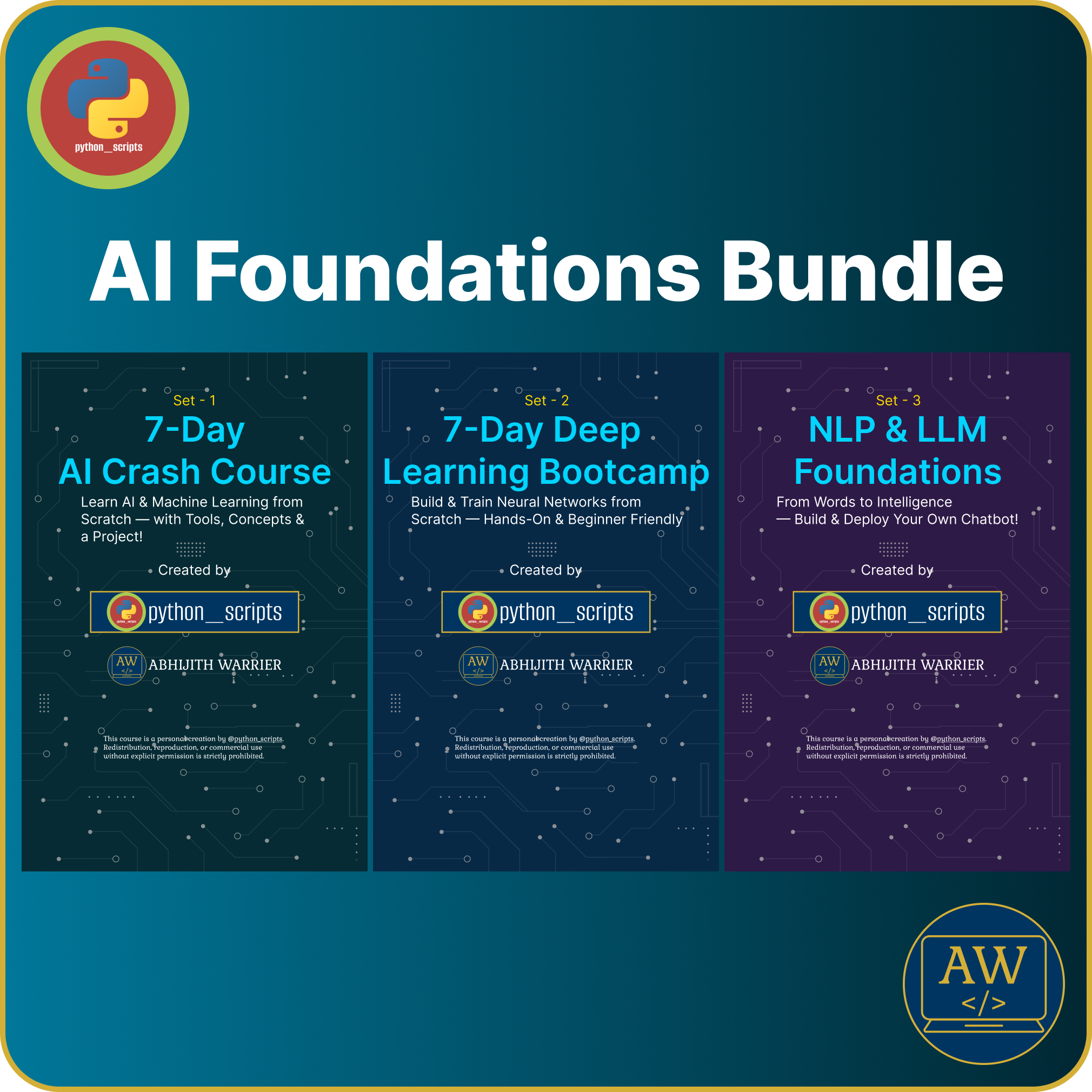
AI Foundations Bundle — From AI Basics to Deep Learning & NLP
Learn AI the right way — from core concepts to deep learning and language models, all in one structured bundle.
Ideal for beginners and developers who want a complete AI roadmap without confusion.
No comments yet. Be the first to comment!