
Security Realities: Google's Privacy Policy Update — AI and Data Privacy
Introduction:
Google's October 2026 privacy policy update has brought renewed attention to how personal information may be used across its expanding ecosystem of AI-powered services. With Gmail, Google Drive, Photos, and Gemini increasingly connected through intelligent features, questions about data privacy and advertising have become more important.
The central concern is whether information originally provided for one purpose could influence experiences elsewhere, including personalized advertising. Understanding this requires separating what Google's policies permit, how connected AI services operate, and what protections users can expect.
Why Google's Privacy Policy Matters:
Google operates an extensive ecosystem of services that millions of users rely on for communication, productivity, storage, and information discovery. Each service processes different categories of information, often under shared account and privacy controls.
As AI capabilities become integrated across these products, the boundaries between individual services become increasingly important. Information that previously remained within a particular workflow may become available to another feature when users authorize connected experiences.
This makes transparency around data access and permitted uses essential.
The Role of Gmail in Google's Ecosystem:
Gmail contains considerably more than ordinary messages. Emails may include purchase confirmations, travel reservations, financial notifications, personal conversations, and other information that reveals aspects of a user's activities.
Such information can be valuable for AI-powered assistance. For example, a connected assistant could retrieve travel details or summarize information from messages without requiring users to search manually.
However, using email information to complete a requested task is fundamentally different from using that information for advertising personalization. These purposes should not be treated as interchangeable.
What the Privacy Update Raises:
The October update has prompted questions about how information from connected Google services may contribute to personalized experiences, including advertising.
An important distinction is that the existence of policy language allowing certain data uses does not automatically mean Google is scanning every Gmail inbox to target advertisements. The actual implications depend on which services are connected, what permissions users have granted, and how specific features process information.
Understanding these distinctions is necessary before drawing conclusions about the scope of the change.
AI Personalisation Changes the Privacy Equation:
Traditional personalization systems generally rely on signals such as search activity, browsing behavior, preferences, and interactions with services. AI-powered personalization can potentially incorporate richer contextual information.
For instance, an assistant connected to multiple applications may combine information from emails, documents, and other authorized sources to provide more relevant responses.
While this can improve usefulness, it also introduces questions about data boundaries, secondary usage, and whether users understand how information flows between services.
Permission Does Not Always Mean Understanding:
Modern applications frequently request access to connected accounts and services. Users may approve these permissions to enable useful features without fully understanding every potential implication.
A permission to retrieve emails for a travel assistant, for example, may appear straightforward. But users may reasonably expect that access to remain limited to the requested functionality.
Clear consent mechanisms should distinguish between providing a feature, improving a service, and personalizing advertisements.
The Engineering Challenge of Data Boundaries:
From a system architecture perspective, integrating AI across multiple services creates complex data-access requirements. Applications must determine which information can be retrieved, how long it can be retained, and which downstream components may process it.
These restrictions should be enforced through technical controls rather than relying entirely on policy statements. Authorization scopes, data classification, purpose restrictions, and access auditing all contribute to safer integrations.
A secure AI integration should not assume that permission to access information grants unrestricted permission to reuse it.
Why Data Minimisation Still Matters:
Data minimization is a fundamental privacy principle that becomes increasingly relevant as AI systems gain access to more information. Applications should retrieve and process only the data necessary for a specific purpose.
For example, an assistant helping locate a flight reservation may need access to a particular confirmation email. It does not necessarily require unrelated messages or a complete history of personal correspondence.
Limiting data access reduces unnecessary exposure and helps organisations maintain clearer boundaries between functionality and personalisation.
Transparency Must Extend Beyond Privacy Policies:
Privacy policies are important, but their length and complexity can make them difficult for ordinary users to interpret. Meaningful transparency requires more than publishing detailed legal documentation.
Users should be able to understand which applications are connected, what categories of information are accessible, and how those connections affect personalization.
Clear settings, understandable permission descriptions, and straightforward ways to revoke access make privacy controls more practical.
What Users Should Pay Attention To:
For users of Gmail and Google's AI services, the most useful approach is to review the actual settings associated with connected applications and personalized advertising.
Google account permissions, Gemini connected-app settings, and advertising preferences serve different purposes. Disabling one integration does not necessarily change every other personalization setting.
Users should therefore evaluate each setting according to the information they are comfortable sharing and the features they want to use.
A Broader Challenge for AI-Powered Platforms:
The questions surrounding Google's update extend beyond any single company. As AI assistants become integrated into productivity suites, browsers, operating systems, and enterprise applications, similar concerns will emerge across the technology industry.
The underlying challenge is balancing personalized experiences with meaningful control over personal information. Organizations must ensure that expanding AI capabilities do not silently expand the permitted uses of sensitive data.
This balance will increasingly influence how users evaluate and trust AI-powered products.
Conclusion:
Google's privacy policy update highlights an important issue in modern AI ecosystems: connecting services creates opportunities for more useful experiences, but also demands clearer boundaries around personal information.
The key distinction is between authorized AI assistance and broader secondary uses of data. Rather than assuming every connected service uses information in the same way, users and developers should examine the specific permissions, controls, and documented purposes involved.
As AI becomes more deeply integrated into everyday applications, privacy must remain a fundamental part of system design rather than an afterthought.
 Most downloaded free PDF
50 Machine Learning Algorithms Cheatsheet
Blueprints of Intelligence — 50 ML Algorithms decoded
Enjoyed this post?
Stay in the loop
New posts + weekly digest, straight to your inbox.
Create a free account
- Save posts to your vault
- Like posts & build history
- New-post alerts
Comments
Add Your Comment
Related Posts

Security Realities: Why Security Tools Don’t Fix Security Culture
57
Security Realities: Threat Modeling for Engineers Who Actually Ship Code
94
Security Realities: The Trade-Off Between Developer Velocity and Security
145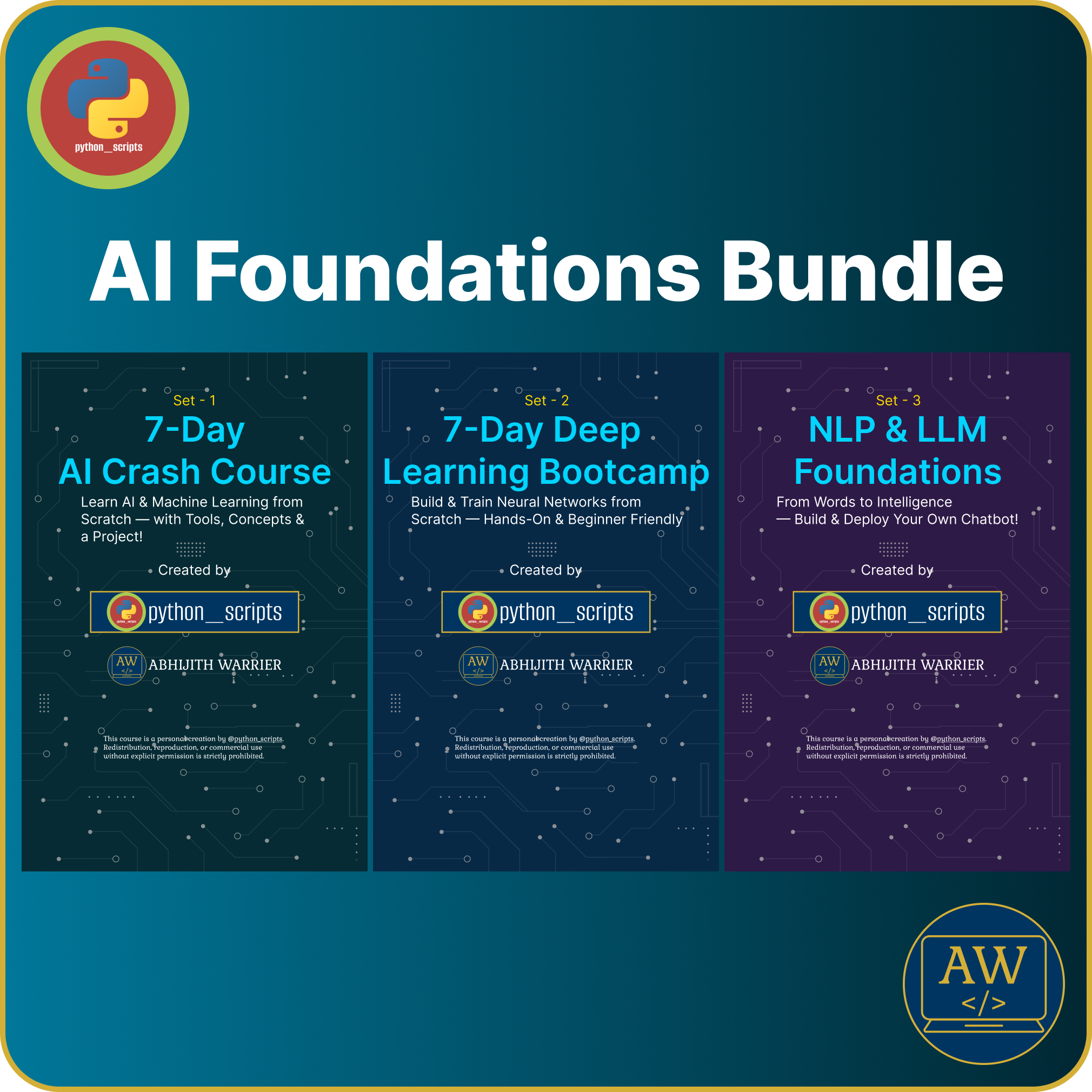
AI Foundations Bundle — From AI Basics to Deep Learning & NLP
Learn AI the right way — from core concepts to deep learning and language models, all in one structured bundle.
Ideal for beginners and developers who want a complete AI roadmap without confusion.
No comments yet. Be the first to comment!